English
 русский
 عربى

 Inquiry

Industry News
Home / News / Industry News / Which Materials Are Best for a Low Noise Axial Flow Fan Used in Harsh Industrial Environments
2026-11-20
A fan installed in a chemical plant faces different demands from one used in a warehouse. Moisture, dust, corrosive fumes and temperature changes can gradually damage its blades, housing and mechanical parts. These conditions also affect maintenance needs and operating noise.
When choosing a Low Noise Axial Flow Fan, buyers should look beyond the blade material. The housing, bearings, fasteners and surface coatings all need to suit the installation environment. A material that performs well in one part of the fan may not be appropriate for the entire assembly.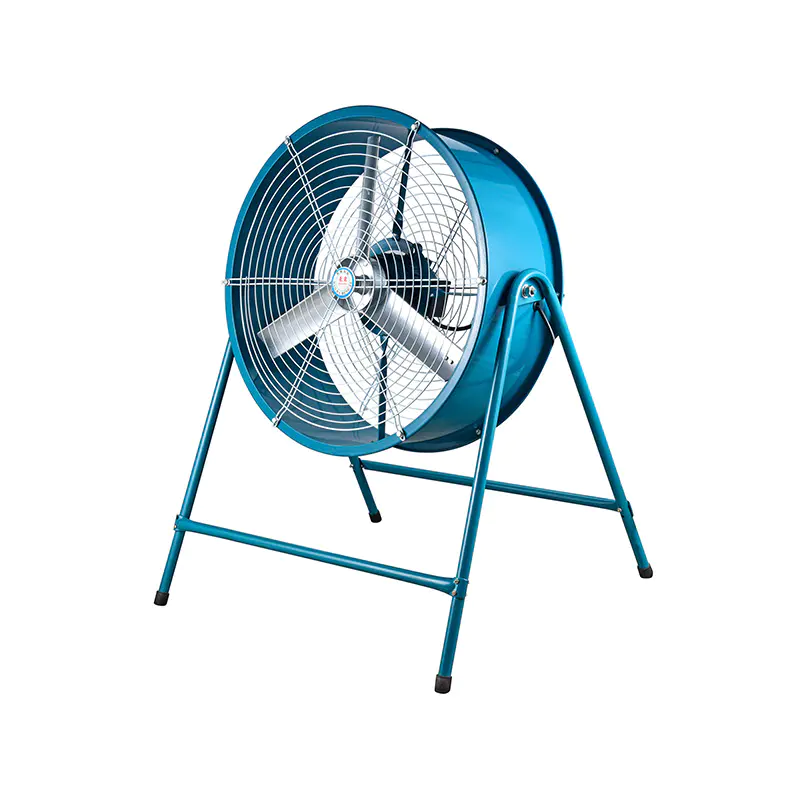
Why Material Selection Matters
An axial flow fan moves air parallel to its rotating shaft. Airflow and noise depend on blade shape, rotational speed, motor performance and the resistance of the ventilation system. The materials used in its construction affect how well the fan withstands these operating conditions.
The main considerations are corrosion resistance, mechanical strength, temperature tolerance, vibration behavior and service life. These properties are closely related. A lightweight blade may reduce rotating mass, for example, but it still needs enough stiffness to resist deformation during operation.
There is no single material that suits every industrial installation. Chemical exposure, operating temperature and required airflow should guide the choice.
Aluminum Alloys: Lightweight and Practical
Aluminum alloys are widely used for industrial fan blades. Their relatively low density keeps rotating mass down, while their strength is suitable for many ventilation applications.
Lower blade weight can reduce mechanical loading on the motor and bearings. Aluminum is also relatively easy to form into different blade profiles, giving manufacturers flexibility when designing for specific airflow requirements.
Its corrosion resistance is useful in many general industrial environments, but it should not be assumed to withstand every chemical. Salt and aggressive substances can cause damage, so anodizing or a suitable protective coating may be necessary.
Aluminum blades are often a reasonable option for factories, warehouses and ventilation systems with moderate environmental exposure.
Stainless Steel for More Demanding Conditions
Where moisture or corrosive substances are a concern, stainless steel may be a better choice. Grades 304 and 316 are commonly considered for industrial equipment, although their suitability depends on the actual exposure.
The trade-off is weight. Stainless steel is considerably heavier than aluminum, so using it for fan blades increases rotating mass and may affect motor and bearing requirements.
The rest of the assembly also deserves attention. Fasteners, welds, shafts and mounting parts can become weak points if they are made from materials with poorer corrosion resistance. Specifying stainless steel blades alone does not guarantee that the complete fan will withstand a corrosive environment.
Reinforced Plastics for Lightweight Construction
Engineering plastics offer another option, particularly where chemical compatibility and low weight are priorities. Glass-fiber-reinforced polypropylene and glass-fiber-reinforced polyamide are used in some fan blades and housing components.
Their properties vary by grade, but potential advantages include low weight, resistance to selected chemicals and flexibility in blade design. Some plastic constructions can also damp certain vibrations more effectively than rigid metal components.
There are limits to consider. Polyamide absorbs moisture, which can affect its dimensions and mechanical properties. Reinforced polypropylene also has temperature and mechanical limits that depend on its formulation.
Ask the manufacturer for the exact material grade, continuous operating temperature and chemical compatibility information. A general description such as "reinforced plastic" is not enough to judge whether a component will last in a particular plant.
Comparing Common Fan Materials
| Material | Main advantages | Potential limitations | Typical applications |
|---|---|---|---|
| Aluminum alloy | Low weight, good strength | May need additional protection in aggressive environments | General industrial ventilation |
| Stainless steel 304 | General corrosion resistance | Less resistant to some chloride environments than 316 | Humid facilities |
| Stainless steel 316 | Improved chloride resistance | Higher weight and cost | Selected corrosive environments |
| Reinforced polypropylene | Lightweight, resistant to selected chemicals | Temperature limitations | Compatible chemical ventilation systems |
| Reinforced polyamide | Strength and design flexibility | Moisture absorption | Industrial fan blades |
Actual performance depends on the material grade, component design and operating conditions. Chemical exposure and temperature should be checked before finalizing the specification.
Material Choice Is Only Part of Noise Control
A Low Noise Axial Flow Fan needs to manage both aerodynamic and mechanical noise. The two have different causes.
Air turbulence, blade geometry, airflow separation and pressure fluctuations contribute to aerodynamic noise. Mechanical noise is more often associated with imbalance, worn bearings, shaft misalignment or loose connections.
Blade materials influence vibration behavior. Lightweight construction can reduce rotating mass, while adequate stiffness helps blades maintain their shape. Some reinforced plastics provide useful vibration damping, but their performance depends on the material and blade design.
None of these properties guarantees quiet operation by itself. Rotor balancing, bearing quality, motor design and rotational speed remain important. When comparing products, request noise test results together with the airflow, static pressure and fan speed at which the measurements were taken.
Don't Overlook the Housing and Its Coating
The housing protects the internal components and must remain rigid during operation. Common choices include galvanized steel, stainless steel, aluminum and engineering plastics.
Galvanized steel is often used in general industrial environments because its zinc coating protects the underlying steel. Scratches or damaged areas can expose the base metal to corrosion. Stainless steel may be more suitable in harsher conditions, provided the selected grade matches the chemicals present. Aluminum offers lower weight, while plastic housings may work where temperature and chemical compatibility allow.
Epoxy and powder coatings can provide additional surface protection. Check coating adhesion, thickness and coverage, particularly around edges, joints and fixing points. A coating that performs well under normal outdoor conditions may not withstand contact with industrial chemicals.
An IP rating indicates the level of protection against solid objects and water ingress. It does not, by itself, confirm chemical resistance or suitability for hazardous areas.
What to Request Before Purchasing
Before approving a fan, buyers should ask the manufacturer for the following information:
For coastal sites or chemical processing facilities, provide the manufacturer with details of the actual environment. This allows material compatibility to be assessed against the substances and temperatures the fan will encounter.
Choose Materials for the Installation Environment
Aluminum is a practical option where low weight and general corrosion resistance are priorities. Stainless steel is worth considering for selected corrosive environments, while reinforced plastics can suit applications that benefit from lightweight construction and chemical resistance.
The final specification should cover the complete fan, not just its blades. Checking material grades, operating limits, coatings and noise test data before ordering helps prevent avoidable maintenance problems after installation.

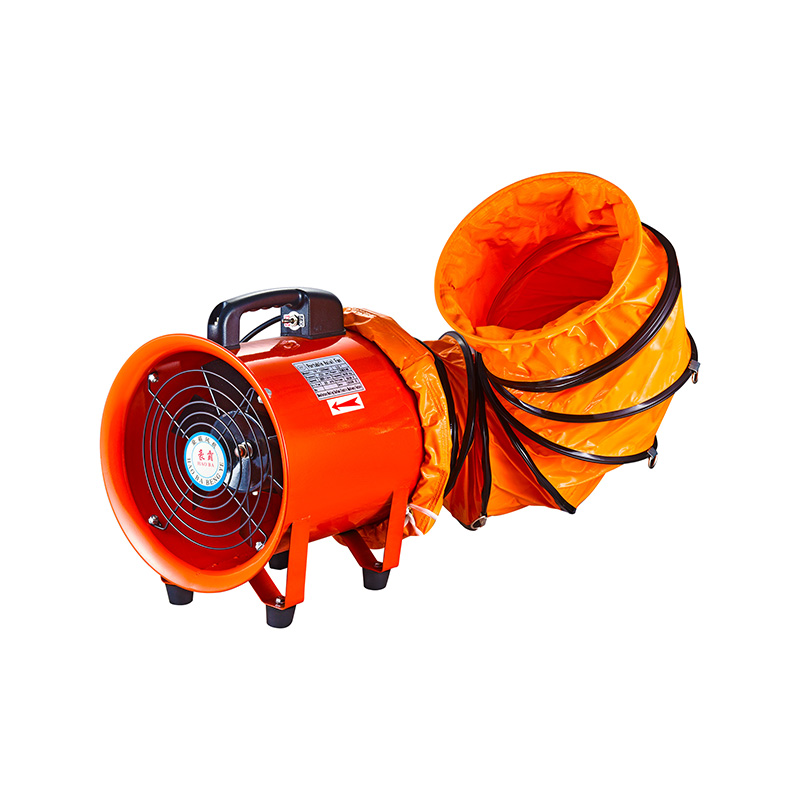
Model: SF
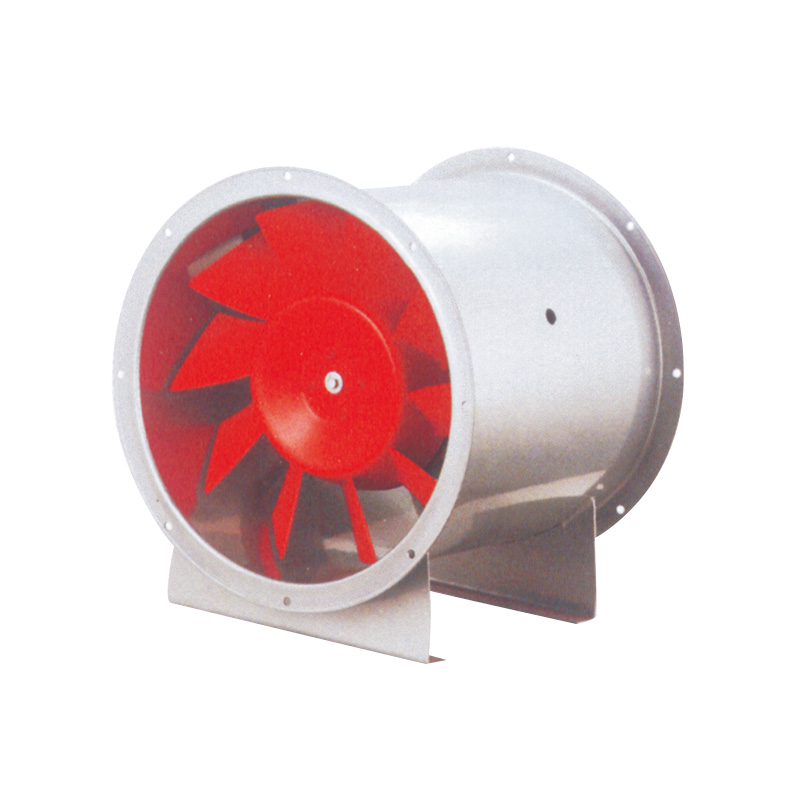
Model: SWF-I. II. III
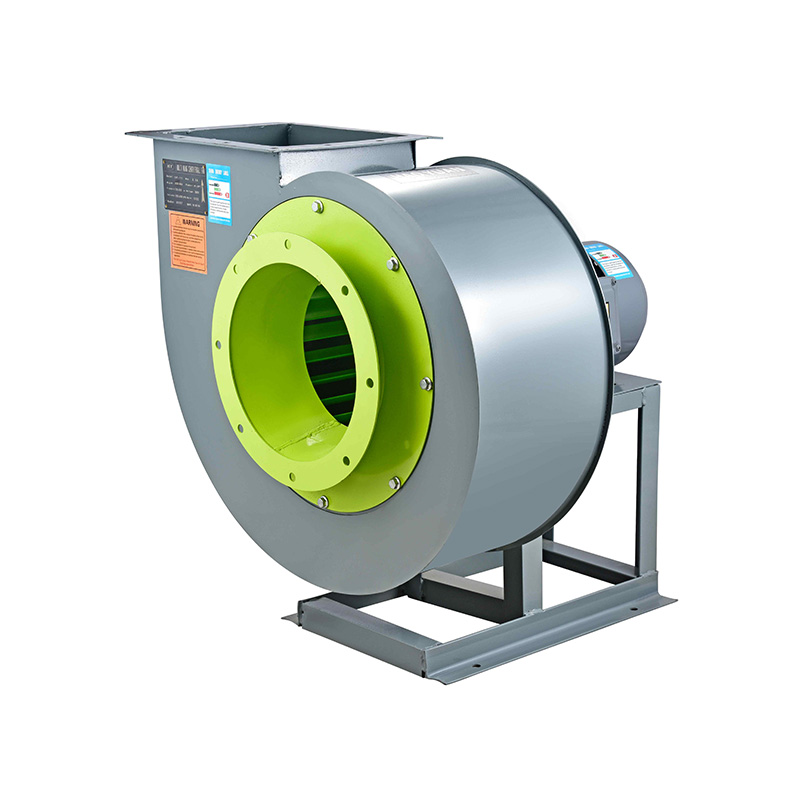
Model: YG5-47
Model: WT35-11/FWT35-11

No. 12, Caoao Industrial Zone B, Daxi Town, Wenling City, Taizhou City, Zhejiang Province, China.
Email: [email protected]
Tel: +86-0576-8631 3688
Phone: +86-189-6859-2966
FAX: +86-0576-8631-3688
Copyright © Taizhou Haoba Electromechanical Co., Ltd. All Rights Reserved.

Industrial Centrifugal Fan Manufacturer