A ventilation system that generates excessive noise in a production facility, a server room, or a commercial building is rarely just a nuisance — it signals an aerodynamic inefficiency that is also costing energy. Engineers specifying axial flow fans for industrial and commercial applications frequently encounter a tension between airflow performance and acoustic output that does not resolve itself through motor selection or housing design alone. The blade is where that tension originates, and understanding the Axial Flow Fan Working Principle at the blade level — how geometry determines both the pressure a fan can generate and the sound it produces — is what allows informed design and procurement decisions rather than trial-and-error specification.
Tip Speed
Key Acoustic Driver
6 Types
Fan Configurations
3D Design
Stagger & Sweep
Working PrincipleThe Axial Flow Fan Working Principle at the Blade Level
How Blades Move Air and Generate Pressure
An axial flow fan moves air by rotating a set of blades around a central hub, drawing air in along the axis of rotation and discharging it in the same axial direction. Each blade functions as an airfoil — angled to the direction of rotation in a way that creates a pressure difference between the two sides of the blade surface. The low-pressure side draws air toward the blade; the high-pressure side pushes it away in the discharge direction.
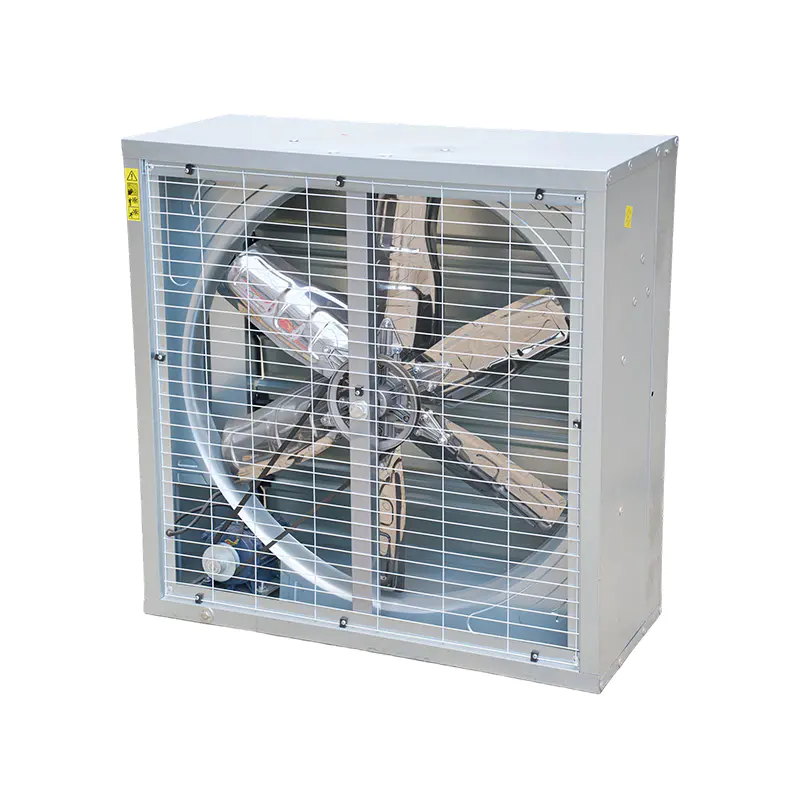
The efficiency with which this pressure difference is created and sustained across the blade depends on several geometric factors: the pitch angle of the blade relative to the plane of rotation, the camber and thickness of the blade cross-section, the chord length from leading to trailing edge, and the span from hub to blade tip. These are not independent variables — changing one affects how the others perform.
Where Turbulence Begins
The aerodynamic forces acting on each blade are not perfectly smooth. At the leading edge, air divides to flow across both blade surfaces. At the trailing edge, the two flows rejoin. If the transition is clean and the blade angle is well-matched to the incoming airflow, this process is efficient and quiet. If there is a mismatch — the blade pitch is too steep for the operating condition, the leading edge geometry is blunt rather than profiled, or the blade operates close to stall — the flow separates from the blade surface and becomes turbulent.
This turbulence is the acoustic source. A blade that maintains attached, laminar flow across its surface is quieter than one that generates turbulence — all else being equal.
Blade Geometry & NoiseHow Blade Geometry Affects Noise Output
Blade Pitch Angle and Its Acoustic Consequences
Blade pitch — the angle at which the blade is set relative to the plane of rotation — determines how much work each blade does per revolution and at what aerodynamic cost. A steeper pitch generates more pressure per revolution but increases the angle of attack on the incoming air. Beyond a threshold angle specific to the blade profile, flow separation begins on the suction side of the blade, and noise increases.
This is why fans operating at off-design conditions — lower flow rates than intended, higher static pressure than the design point — become louder. The blade pitch optimized for a specific operating condition performs well acoustically only near that condition. When system resistance changes, the blade sees a different effective angle of attack and may operate in a regime where separation noise is significantly elevated.
Leading Edge Geometry
A blunt or square-edged leading edge creates a strong leading-edge vortex that becomes a noise source. A well-profiled leading edge — rounded and tapered — allows incoming air to divide smoothly, reducing that vortex and the noise it generates.
Trailing Edge Geometry
A thick or irregular trailing edge creates a turbulent wake that radiates as trailing-edge noise. Trailing-edge serrations, borrowed from owl wing biomechanics, are used in advanced fan designs to break up this wake structure into smaller, less acoustically efficient vortices.
Blade Count
More blades spread the work of moving air across more surfaces, allowing each blade to operate at a lower angle of attack. However, more blades also increase the blade passing frequency tone and at high tip speeds, blade-to-blade interactions can create additional noise sources.
Tip Speed
Aerodynamic noise scales strongly with tip velocity. Low Noise Axial Flow Fan designs typically reduce tip speed by using a larger diameter at lower rotational speed to achieve the required flow, rather than a smaller diameter running faster.
EfficiencyThe Efficiency Side of the Blade Design Equation
Blade Profile and Aerodynamic Efficiency
A blade profile that maintains attached flow across a wide range of operating conditions converts more shaft input power into useful airflow and pressure, wasting less energy as heat and turbulence. Airfoil-profiled blades — with a cambered, aerodynamically shaped cross-section — outperform flat-plate or simple curved blades in this regard. The profile allows the blade to generate lift more efficiently, with a more favorable lift-to-drag ratio at the operating angle of attack.
For wholesale axial flow fan applications where energy consumption is a procurement consideration — particularly in facilities where fans run continuously — blade aerodynamic efficiency translates directly to operating cost. A fan with a well-designed blade profile consuming less power per unit of airflow over thousands of operating hours represents a meaningful total cost advantage over a lower-efficiency alternative.
Stagger and Sweep in Three-Dimensional Blade Design
Modern high-efficiency fan blades are not simple two-dimensional profiles extruded along the span. They incorporate stagger — variation in pitch angle from hub to tip — and sweep — curvature of the blade in the plane of rotation — to manage the spanwise distribution of aerodynamic loading.
These three-dimensional features serve multiple purposes:
3D Blade Design Features
Spanwise loading controlDistributing the aerodynamic work more evenly along the blade span reduces local peaks that cause premature flow separation at specific span locations.
Tip vortex managementA swept tip alters how the inevitable tip vortex forms and sheds, which affects both noise output and the efficiency loss associated with tip recirculation.
Inlet flow accommodationSweep allows the leading edge to meet the incoming flow at a more favorable angle across different span positions, particularly important in fans operating in non-uniform inlet conditions.
Configuration ComparisonDesign Comparison Across Axial Fan Configurations
| Configuration |
Noise Characteristic |
Efficiency Profile |
Suited Applications |
| Standard flat-blade axial fan |
Higher broadband and tonal noise |
Moderate |
Low-cost ventilation, general air moving |
| Airfoil-profiled blade fan |
Reduced separation noise |
Higher at design point |
HVAC, industrial process ventilation |
| Low Noise Axial Flow Fan |
Significantly reduced tonal and broadband noise |
Favorable at low-speed operating point |
Acoustic-sensitive environments, data centres |
| Wall mounted axial flow fan |
Varies by blade design; housing effects significant |
Suited for direct wall installation |
Building ventilation, commercial exhaust |
| Bifurcated axial flow fan |
Moderate noise (motor outside airstream) |
Suitable for elevated temperatures |
Fume extraction, high-temperature process ventilation |
| Variable pitch axial fan |
Adjustable with operating point; can maintain low noise |
High across range |
Tunnel ventilation, variable-load industrial systems |
Structural VariantsStructural Variants and Their Acoustic Implications
The Wall Mounted Axial Flow Fan and Housing Interaction
In a wall mounted axial flow fan, the interaction between the rotating blade assembly and the fixed mounting frame and housing creates additional noise sources beyond what the blade alone generates. The tip clearance between the blade tip and the housing ring is a critical variable — too large and tip vortex losses reduce efficiency and generate noise; too small and the risk of contact under thermal expansion or vibration becomes a maintenance concern.
The housing inlet geometry also matters. A well-designed bell-mouth or flared inlet reduces turbulence in the incoming airflow before it reaches the blade, which reduces inflow turbulence noise — a significant contributor to overall fan noise levels particularly at the blade leading edge. Square-edged orifice inlets, by contrast, generate inlet separation that the blade then encounters on every revolution.
The Bifurcated Axial Flow Fan Design
A bifurcated axial flow fan is a configuration in which the motor is mounted outside the airstream, with the fan shaft passing through a bifurcated (split) section of the duct. This allows the fan to handle high-temperature gases or chemically aggressive airstreams without exposing the motor windings to the conveyed air.
From an acoustic standpoint, the bifurcated duct section introduces a flow obstruction upstream of the blade that creates turbulence in the inlet flow. This elevated inlet turbulence is an additional noise source compared to a conventional in-line axial fan with an unobstructed inlet. Designs that minimize the aerodynamic profile of the bifurcation and position it far enough upstream to allow flow reattachment before the blade inlet reduce this effect, but it cannot be eliminated entirely. For applications where this configuration is required for process reasons, the acoustic penalty is accepted as a design constraint.
Procurement & SpecificationWhat Blade Design Means for Procurement and Specification
Translating Aerodynamic Principles into Specification Criteria
For engineers and procurement teams evaluating axial flow fan options, the blade design characteristics that affect noise and efficiency are not always visible in standard catalog specifications. Sound power level at a stated operating point and efficiency at the design condition are often provided, but the behavior away from the design point — where many fans actually operate in real installations — is frequently absent from published data.
Useful questions to ask a supplier or axial flow fan factory when evaluating options include:
Supplier Evaluation Questions
1.At what static pressure and airflow rate is the stated sound power level measured?
2.How does noise level change as system resistance increases above the design point?
3.What is the blade profile type — flat plate, cambered plate, or airfoil section?
4.Does the blade incorporate three-dimensional features such as sweep or variable pitch along the span?
5.What tip clearance is maintained between the blade tip and housing?
6.How is the inlet geometry designed — bell-mouth, orifice, or other?
Sourcing from a China Axial Flow Fan Manufacturer
China axial flow fan manufacturing has developed substantially across the capability range, from commodity air-movement products through to engineered fans for demanding industrial applications. The spread of capability within that supply base means that country-of-origin information alone tells a buyer very little about product quality.
For buyers sourcing through China axial flow fan channels — whether wholesale axial flow fan supply for distribution or direct procurement for an installation project — the relevant evaluation criteria center on whether the manufacturer can document blade design choices, provide tested acoustic and performance data from accredited testing, and support technical specification discussions with engineering substance rather than catalog descriptions alone. A supplier who can explain why their blade profile produces a specific acoustic result understands their product at a depth that supports specification confidence.
Fan noise and energy efficiency both originate at the same place: the blade and its interaction with the air it moves. Design choices at the blade level determine where a fan sits on the noise-efficiency curve before any other system variable is considered.
Engineering Quieter VentilationEngineering Quieter, More Efficient Ventilation from the Blade Up
Fan noise and energy efficiency both originate at the same place: the blade and its interaction with the air it moves. A blade that maintains clean, attached flow across its operating range converts shaft power into useful airflow without generating the turbulence that becomes both acoustic and thermodynamic waste. Design choices at the blade level — profile shape, pitch angle, leading and trailing edge geometry, tip treatment, and three-dimensional sweep — determine where a fan sits on the noise-efficiency curve before any other system variable is considered. For engineers specifying ventilation systems and procurement teams evaluating fan suppliers, understanding these relationships allows more precise specification, better supplier evaluation, and more defensible decisions about when the acoustic or efficiency premium of an advanced blade design is warranted by the application.
Taizhou Haoba Electromechanical Co., Ltd. manufactures axial flow fans across a range of configurations including Low Noise Axial Flow Fan designs, wall mounted formats, and bifurcated variants for elevated-temperature applications, and can discuss blade design specifications, acoustic performance data, and wholesale supply terms directly with engineering and procurement teams evaluating sourcing options.


 English
 русский
 عربى
عربى
 Inquiry