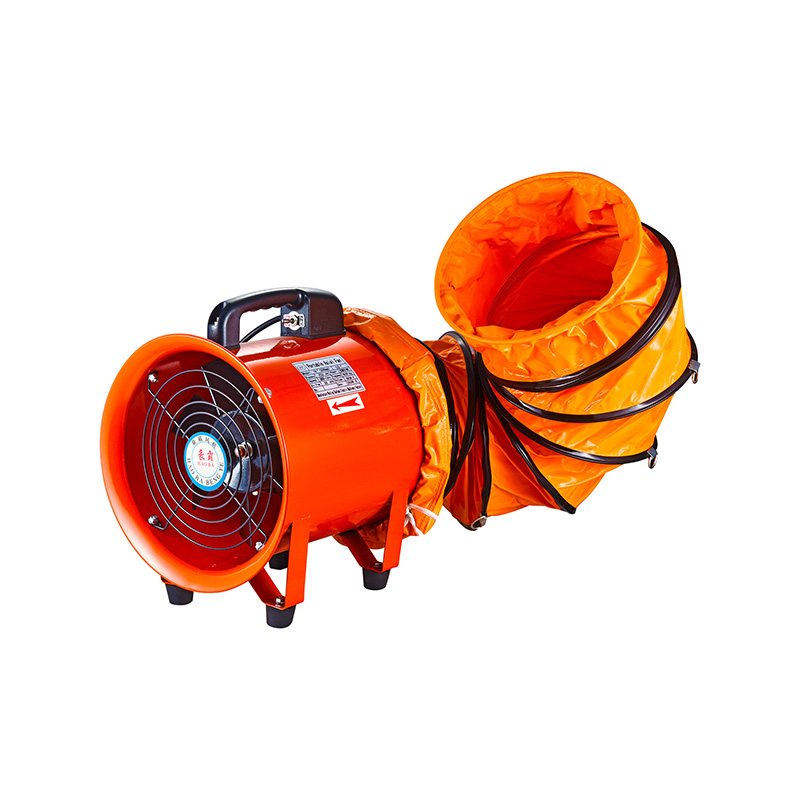
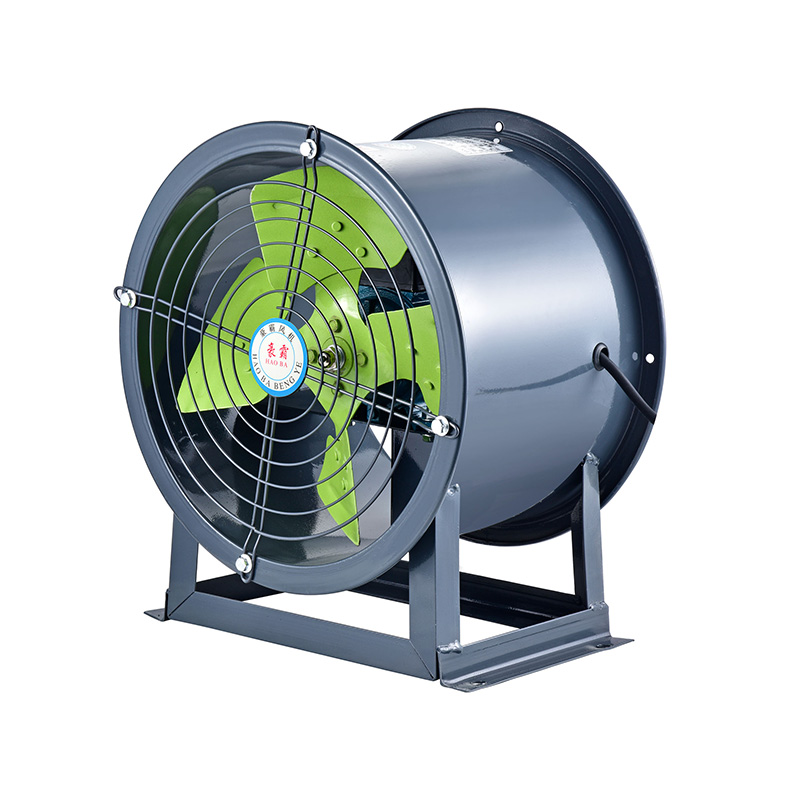
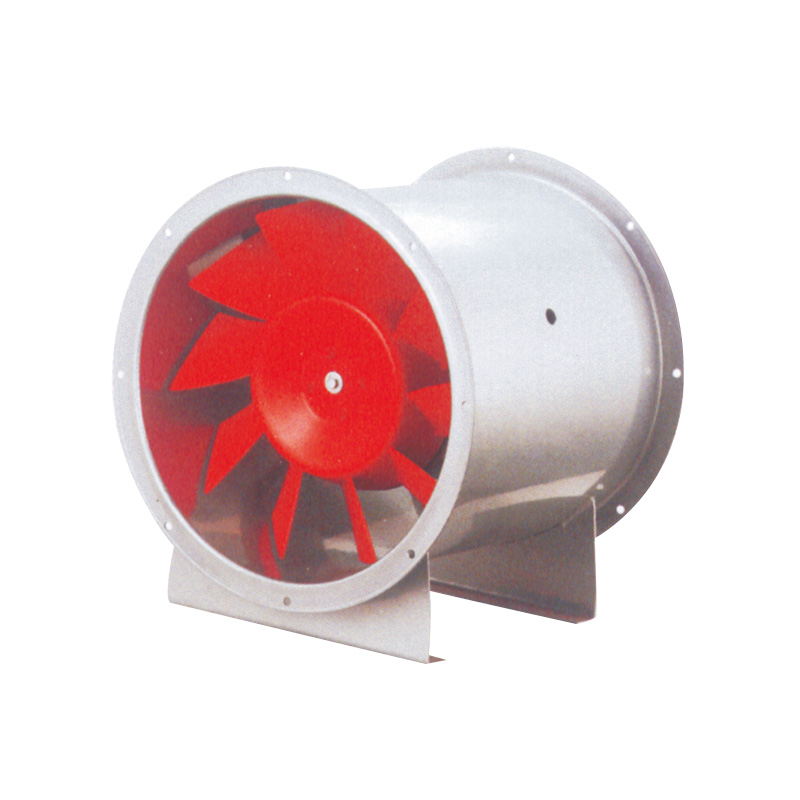
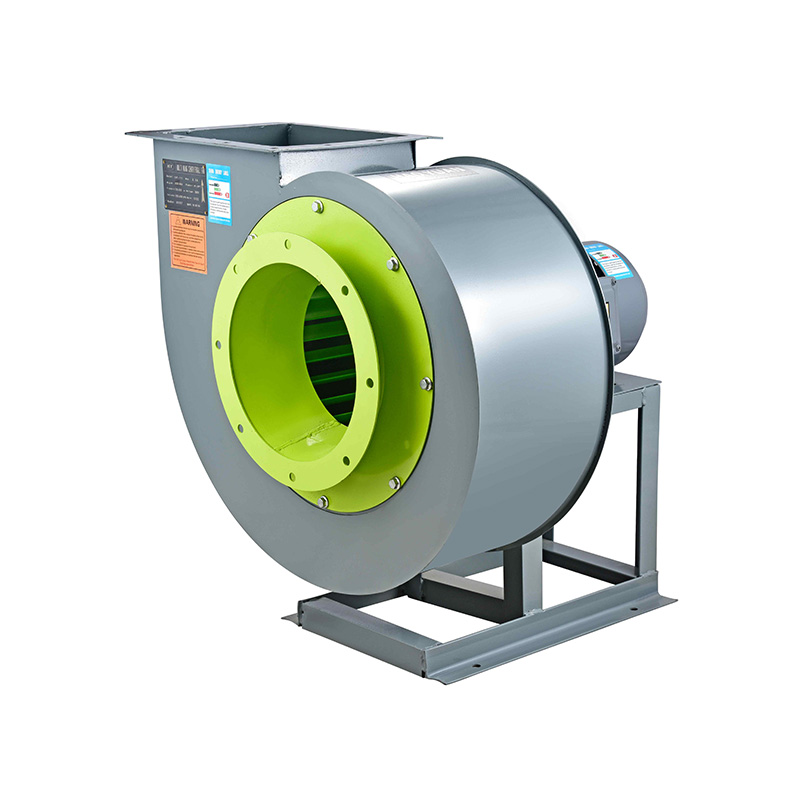
Stagnant air in enclosed industrial spaces is not an abstract concern — it shows up as rising temperatures during shifts, airborne particulate that accumulates without adequate exchange, and CO2 concentrations that creep upward in poorly ventilated zones. Facilities managers and HVAC engineers working on warehouses, workshops, tunnels, and plant rooms encounter these conditions regularly. The variables responsible for poor air quality in confined spaces are well understood, but selecting the right ventilation equipment to address them is where decisions become technical and consequential. Axial flow fans are among the most widely used solutions in industrial ventilation for exactly this reason — their airflow mechanism, installation flexibility, and range of configurations make them suited to a broad spectrum of confined space challenges. Understanding how they work, which type fits which environment, and what to look for when sourcing at scale is the foundation of a sound ventilation strategy.
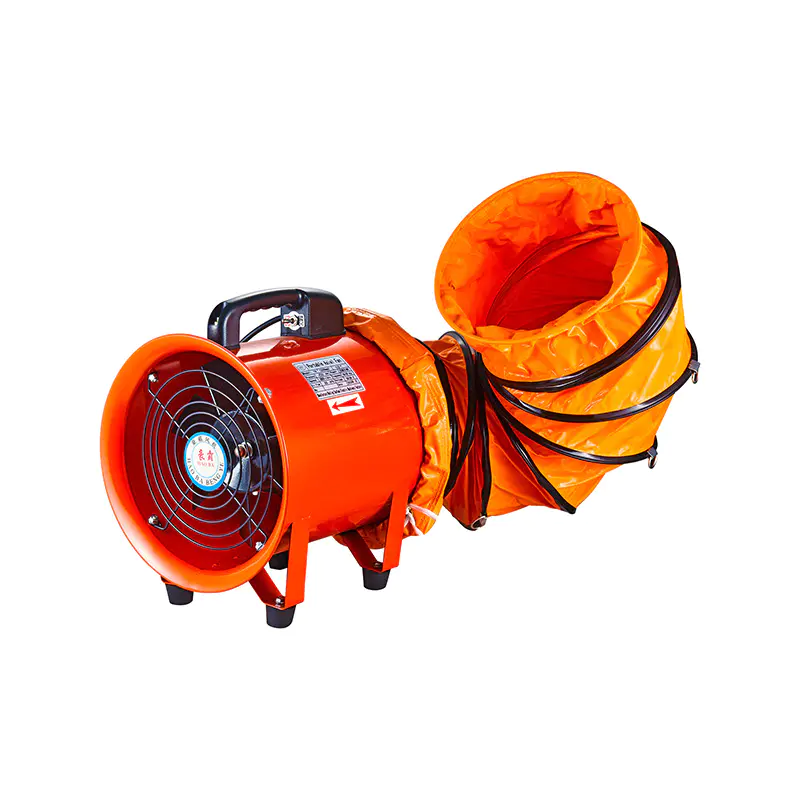
Why Air Quality Deteriorates in Confined Spaces
The Accumulation Problem That Standard Ventilation Misses
Confined spaces — whether manufacturing floors, underground plant rooms, server enclosures, storage facilities, or deep workshop bays — share a structural characteristic that makes air quality management genuinely difficult: the ratio of air volume to occupancy, equipment heat load, and contaminant generation rate creates conditions where air exchange must be deliberate and engineered rather than incidental.
In open or well-connected spaces, natural air movement and building leakage provide some passive exchange. In tightly bounded spaces, this passive exchange is negligible. What accumulates instead:
- Heat generated by equipment, lighting, and human activity with nowhere to dissipate
- CO2 from occupants, rising steadily without displacement by fresh air
- Airborne particulate from machining, packaging, welding, or material handling
- Humidity from industrial processes, condensation, and respiration
- Combustion byproducts or chemical fumes in applicable environments
Airflow Stagnation as the Root Cause
Each of these accumulates faster than it is removed when ventilation is inadequate, and the interaction between them — high humidity and temperature, combined with elevated particulate — creates conditions that affect both equipment performance and occupant health.
Beyond the specific contaminants, the underlying condition enabling their accumulation is airflow stagnation — zones within the space where air moves too slowly or not at all to carry contaminants toward an exhaust point. Dead zones form in corners, behind large equipment, in ceiling pockets, and at floor level below equipment clearance heights. A ventilation system that moves air volume across the space without addressing stagnation zones will improve average air quality metrics while leaving problem areas unchanged. Effective confined space ventilation requires airflow design that reaches these zones — which is where fan selection and placement decisions intersect directly with air quality outcomes.
How Air Circulation Works in Confined Spaces
Air moves from higher pressure to lower pressure. Ventilation systems create this pressure differential intentionally — supply fans push air into a space, raising its pressure slightly; exhaust fans draw air out, reducing it. The pressure difference drives airflow from inlet to outlet, and the path that air takes between these two points determines which zones receive adequate exchange and which become stagnant.
For confined space ventilation design, the practical implication is that fan placement cannot be treated independently of airflow path. A fan positioned where its discharge immediately meets an obstacle or short-circuits to a nearby exhaust point will move air volume without achieving the distribution the space needs.
Supply-Only Ventilation
Pushes fresh air into the space, displacing contaminated air through natural leakage or passive exhaust openings. It works well where positive pressure is acceptable and where the space does not generate significant airborne contaminants at specific locations.
Exhaust-Only Ventilation
Draws air out, creating slight negative pressure that pulls fresh air in through designed inlets. It is the preferred approach where contaminants need to be captured at their source and directed away from occupants before they disperse.
Balanced Systems
Use both supply and exhaust fans to control the full airflow path, offering precise management of air distribution across larger or more complex spaces.
The Axial Flow Fan Working Principle is directly applicable to all three configurations, which is one reason axial fans are the standard choice across such a wide range of confined space ventilation applications.
Axial Flow Fan Working Principle
MECH
How the Mechanism Converts Rotation into Airflow
An axial flow fan moves air along its rotational axis — the axis around which the blades spin is aligned with the direction of airflow. As the blades rotate, their angled profile creates pressure on the leading face and reduced pressure on the trailing face. Air is pushed from the low-pressure side toward the high-pressure side, producing a continuous flow in one direction along the fan axis.
The key characteristics of this mechanism that make it well suited to ventilation applications:
- High airflow volume relative to the fan's size and power consumption
- Relatively low static pressure generation compared to centrifugal fans — suited for applications where ductwork resistance is low and flow volume is the priority
- Compact axial depth that allows installation in walls, ducts, and panels without large housing footprints
- Reversible operation in many designs, allowing the same unit to function as either supply or exhaust by changing rotation direction
FIT
Why Axial Fans Are Suited to Confined Space Ventilation
The combination of high volume flow and compact form factor aligns well with what confined space ventilation requires. Large air exchange rates — moving the total volume of the space multiple times per hour — are achievable with axial fans at manageable power consumption and noise levels. The ability to mount them directly in walls, roof panels, or duct sections without requiring bulky intermediate housings simplifies installation in spaces where structural access is constrained.
Fan Types and Their Specific Applications
Low Noise Axial Flow Fan
In spaces where workers are present for extended periods — assembly areas, precision manufacturing zones, office-adjacent facilities, laboratories — noise generated by ventilation equipment is a real operational consideration. A Low Noise Axial Flow Fan addresses this through design features that reduce aerodynamic turbulence at the blade surface and minimize mechanical noise from the motor and bearing assembly. The acoustic reduction is achieved through blade geometry optimization, careful balancing of rotating components, and in some designs, the incorporation of noise-attenuating housings. The result is a fan that moves adequate air volume without adding to the ambient noise burden of the space.
Applications where this type is the appropriate choice:
- Enclosed workshops with sustained occupancy
- Clean room ventilation where equipment noise affects concentration or instrument performance
- Healthcare facility plant rooms adjacent to patient areas
- Commercial kitchens and food processing areas where staff work in close proximity to equipment
Wall Mounted Axial Flow Fan
The Wall Mounted Axial Flow Fan is designed to be installed directly into a wall or partition, with the airflow path running perpendicular to the wall surface. This eliminates the need for extended ductwork in situations where the fan can be positioned at the wall separating the ventilated space from the exterior or an adjacent ventilated zone.
Practical advantages of this installation type:
- No floor space consumed — the fan occupies only the wall penetration
- Short installation time compared to duct-integrated systems
- Direct wall mounting positions the fan close to the air intake or discharge point, minimizing system resistance
- Suitable for retrofit applications where ductwork installation is not feasible within the existing structure
This type is widely used in industrial workshops, storage facilities, server rooms, and commercial buildings where wall access to exterior or corridor zones exists and the ventilation requirement is direct air exchange rather than complex distribution.
Bifurcated Axial Flow Fan
A Bifurcated Axial Flow Fan uses a design where the motor is mounted outside the main airstream, in a separate housing connected to the fan casing. The airflow passes through the fan body without contacting the motor or its electrical components. This separation is specifically engineered for environments where the air being moved is hot, chemically aggressive, or potentially flammable — conditions under which a standard motor exposed to the airstream would either degrade rapidly or present a safety risk.
Environments where bifurcated designs are the appropriate specification:
- High-temperature exhaust systems — drying ovens, kilns, industrial furnaces, and heat treatment processes
- Spray booth ventilation where solvent-laden air creates a fire risk at motor surfaces
- Chemical processing extraction where the fumes being exhausted would attack standard motor insulation
- Foundry and metalworking environments where airborne particulate and elevated temperature coexist
The separation of motor from airstream also simplifies maintenance in these environments — the motor can be accessed, inspected, and serviced without entering the contaminated airstream zone.
Comparing Fan Types for Confined Space Applications
| Fan Type |
Noise Level |
Airflow Volume |
Installation Method |
Suited For |
| Low Noise Axial Flow Fan |
Low |
Moderate to high |
Duct or panel mount |
Offices, workshops with occupants, labs |
| Wall Mounted Axial Flow Fan |
Moderate |
High |
Direct wall penetration |
Industrial rooms, warehouses, retrofit |
| Bifurcated Axial Flow Fan |
Moderate to high |
High |
Duct or flanged mount |
High-temp, chemical, and hazardous areas |
| Standard Axial Flow Fan |
Moderate |
High |
Flexible |
General industrial ventilation |
Selecting among these types requires clarity about the primary constraint in each application: acoustic environment, installation geometry, thermal or chemical conditions of the airstream, or flow volume requirement. The same space may combine multiple constraints — a workshop with both occupants and a high-temperature process zone may require a low-noise type in the occupied area and a bifurcated type in the process extraction zone.
Designing Airflow Paths for Effective Confined Space Ventilation
Placement Determines Whether Airflow Reaches Problem Zones
Fan placement within a confined space has as much influence on air quality outcomes as fan capacity. A unit positioned at one end of a long space will move air effectively in the near zone and create stagnation toward the far end. A unit positioned high on a wall will circulate air in the upper volume while floor-level zones remain relatively static — a problem in spaces where contaminants or heat are generated at floor or equipment level.
Effective placement principles:
- Position supply inlets and exhaust outlets on opposing sides or walls to create cross-ventilation that covers the full space volume
- Locate exhaust points at or above the sources of heat and contaminant generation, so rising air carries them toward the exhaust before dispersing
- Avoid placement configurations where the direct path from supply to exhaust bypasses the occupied or contaminated zone
- In long, narrow spaces — tunnels, corridors, production lines — use inline fans or multiple spaced units to maintain air velocity along the full length
Height and Direction Affect Thermal Stratification
Heat stratifies in enclosed spaces — warm air rises and accumulates at ceiling level while cooler air settles at floor level. This stratification is both a ventilation challenge and an energy consideration in heated or cooled spaces. Directing supply air downward and exhausting from high points disrupts stratification and ensures that the occupied zone at mid-height receives adequately conditioned air. In hot industrial environments, ceiling-level exhaust extraction removes accumulated heat from the space efficiently. Floor-level or mid-height supply ensures that replacement air enters the occupied zone rather than being drawn directly to the exhaust point before reaching workers.
Installation and Maintenance Considerations
A fan installed correctly and operated within its design parameters will perform predictably over a long service life. Commissioning checks that prevent common performance issues:
Commissioning Checks
- Verify that airflow direction is correct before finalizing installation — reversing direction after mounting is avoidable if the fan's rotation direction is confirmed against the installation requirement
- Confirm that clearances on both inlet and outlet faces meet manufacturer specifications — insufficient clearance reduces effective airflow and increases turbulence noise
- Check vibration transmission from the fan mounting to the surrounding structure — anti-vibration mounts or flexible duct connections prevent structure-borne noise that worsens acoustic performance
- Document the as-installed operating current as a baseline for future maintenance comparison — rising current draw indicates increasing mechanical resistance and warrants inspection
Maintenance frequency should be scaled to the environment the fan operates in rather than applied uniformly across all installations:
Clean Environments
With filtered supply air: periodic blade and housing cleaning, annual bearing inspection.
Dusty Environments
Particulate-laden environments: more frequent blade cleaning, shorter bearing and seal inspection intervals.
High-Temp / Chemical
More frequent motor housing inspection in bifurcated designs, attention to seal condition between motor housing and airstream path.
Outdoor / Weather-Exposed
Periodic inspection of housing corrosion, fastener condition, and motor weatherproofing.
Blade Cleaning Records Matter
Maintaining a cleaning record for blade surfaces is particularly important, since dust accumulation on blades creates imbalance that generates vibration and accelerates bearing wear — a degradation pathway that begins long before it becomes acoustically obvious.
Sourcing Axial Flow Fans at Industrial Scale
Procurement teams sourcing axial flow fans in volume — for facility rollouts, project supply, or distribution — need to look beyond catalog specifications to evaluate supplier capability in a way that supports sustained supply quality.
Production Consistency
Does the supplier maintain manufacturing quality across production batches, or do samples and volume shipments diverge? Request batch inspection reports as part of standard procurement documentation.
Motor Specification
Motor efficiency class, insulation rating, and protection class should be clearly specified and verifiable, not just stated.
Noise Level Testing
For low-noise specified products, request test data showing acoustic performance at rated operating conditions rather than accepting manufacturer claims without supporting measurement.
Customization Capability
Projects with non-standard dimensions, voltage requirements, or material specifications need a supplier whose production process accommodates variation without reverting to generic catalog product.
Why China Axial Flow Fan Manufacturers Are a Common Supply Source
China Axial Flow Fan production has developed to serve both domestic industrial demand and international export markets, which means that a substantial portion of global axial fan supply — including products used in European, North American, and Southeast Asian industrial facilities — originates from Chinese manufacturers. This is not simply a cost phenomenon, though cost competitiveness is real.
The practical reasons that procurement teams engage Chinese Axial Flow Fan Factory suppliers:
- Production scale supports large-volume orders with consistent lead times
- Manufacturing capability across multiple fan configurations — standard, low-noise, wall-mounted, bifurcated — within a single supplier relationship
- OEM and ODM flexibility that allows branded product development or specification-matched production for project requirements
- Export experience that supports international certification documentation and logistics coordination
Verifying Supplier Claims
For buyers conducting initial supplier evaluation, requesting factory audit documentation, quality management certification, and samples from production-standard tooling — rather than from dedicated sample manufacturing — provides a more accurate picture of what volume orders will produce.
Closing Thoughts
Improving air quality in confined spaces is a ventilation design challenge before it is an equipment procurement decision. The airflow path, placement logic, and system configuration that the space requires determine which fan type, installation method, and capacity specification will actually solve the problem rather than simply moving air. Axial flow fans — across their low-noise, wall-mounted, bifurcated, and standard configurations — address a wide range of these requirements, and their selection should be grounded in a clear understanding of the space's contaminant sources, thermal profile, acoustic constraints, and installation geometry.
About the Manufacturer
For procurement teams and project engineers working through these decisions at scale, partnering with a supplier who can support both technical specification development and volume delivery with consistent quality is as important as the fan selection itself. Taizhou Haoba Electromechanical Co., Ltd. manufactures a range of axial flow fan products across standard, low-noise, wall-mounted, and bifurcated configurations, with production capability supporting both standard specifications and project-specific requirements for Wholesale Axial Flow Fan buyers and industrial ventilation contractors.


 English
 русский
 عربى
عربى
 Inquiry