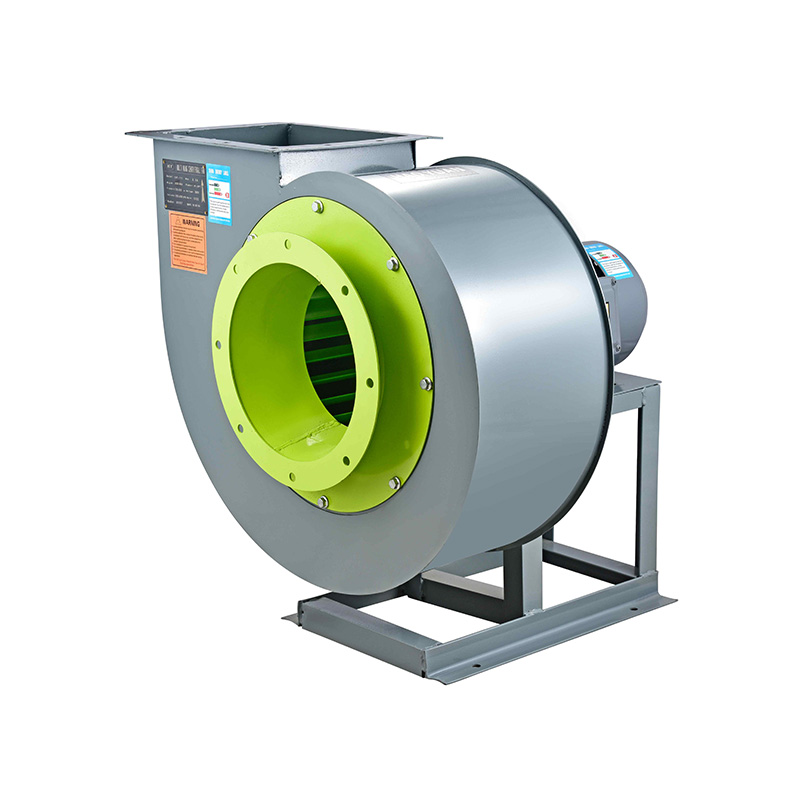
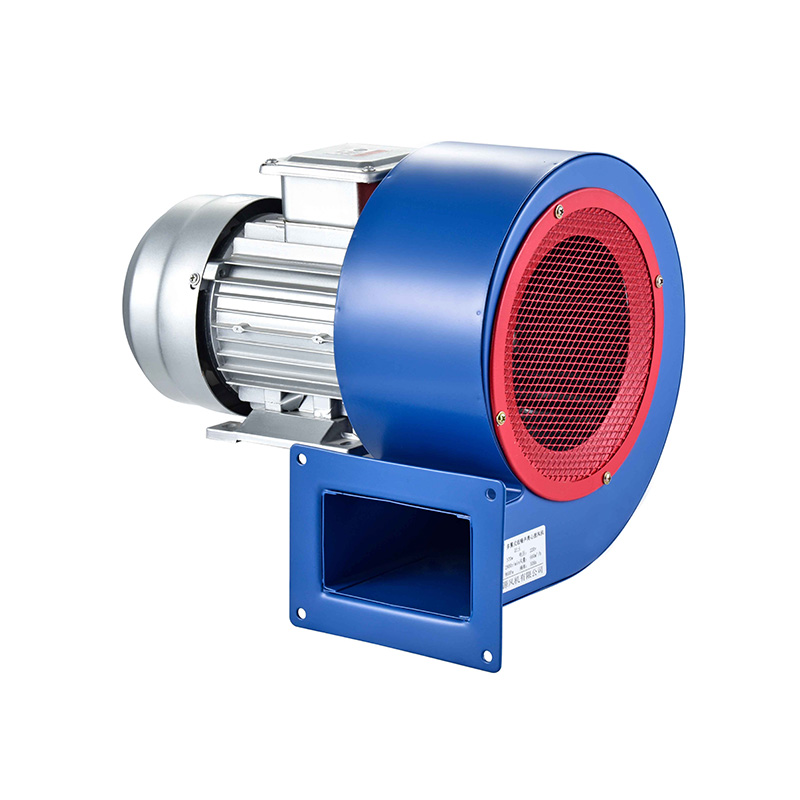
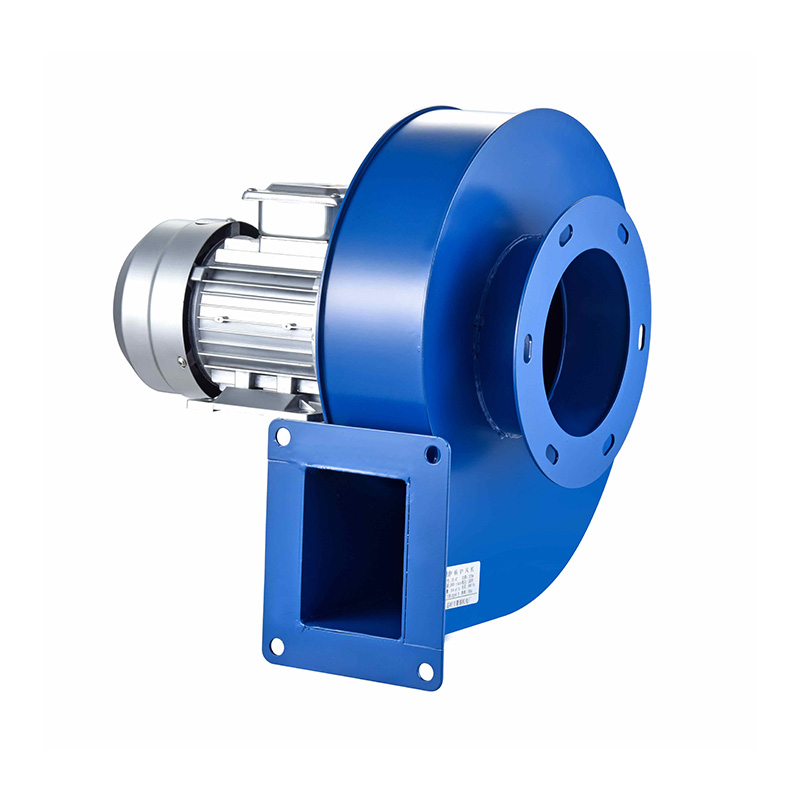
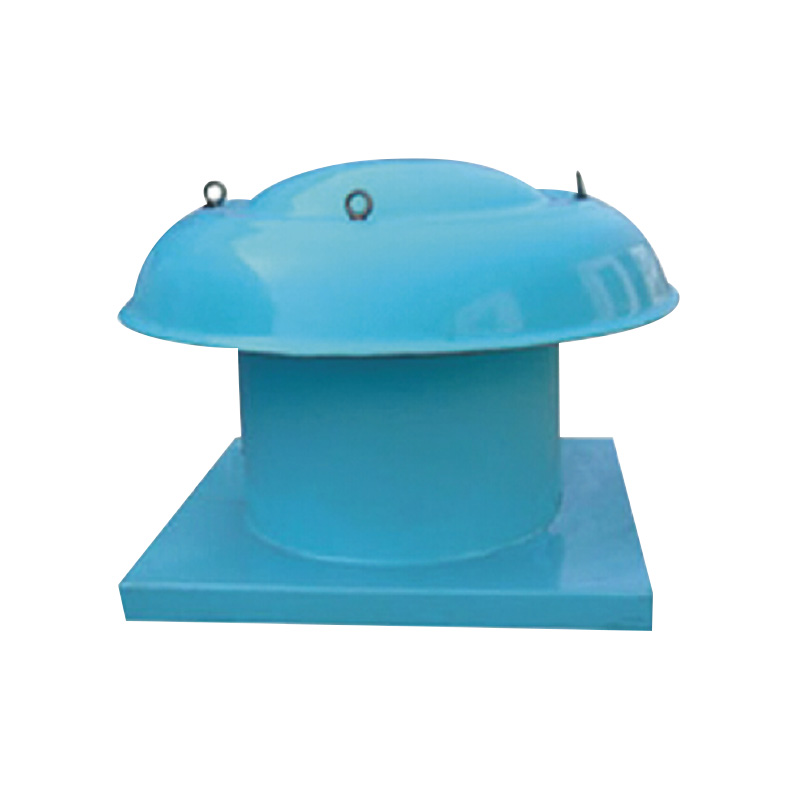
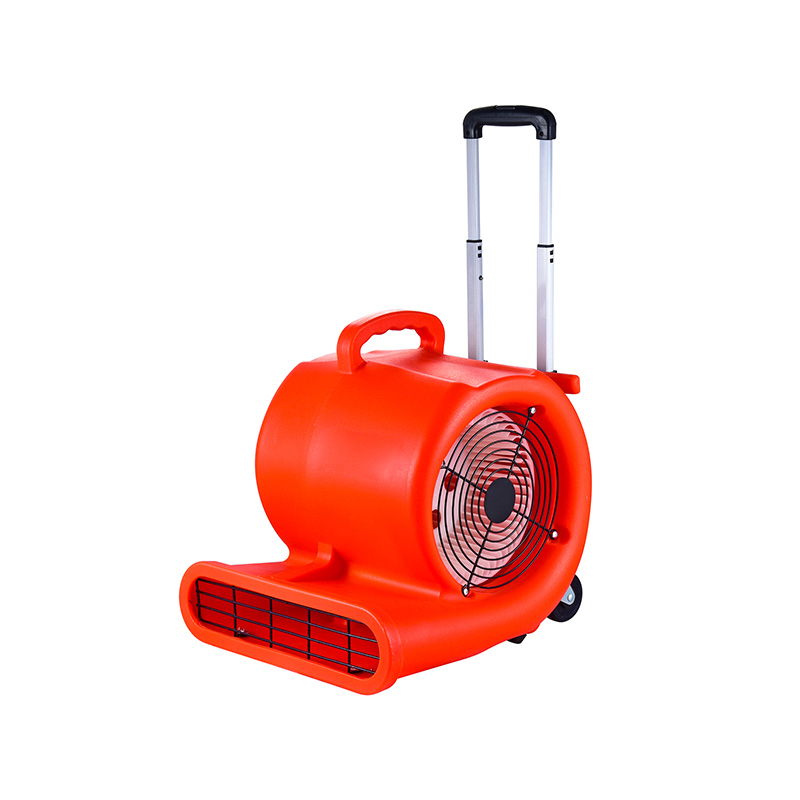
Noise and vibration are things many industrial users notice pretty quickly when a centrifugal fan is running. These fans are found in HVAC systems, factories, ventilation equipment, dust collection units, and process lines, and some operating sound or movement is completely normal. The problem starts when the noise suddenly gets louder or the vibration becomes stronger than it was before.
That kind of change can point to several different issues. The impeller may be out of balance, a bearing could be wearing, the airflow path may be creating turbulence, or the fan may simply not be mounted properly.
For equipment manufacturers, system integrators, and industrial buyers, finding the real cause is more useful than just choosing a bigger fan or trying to block the sound with extra insulation. A Centrifugal Fan Manufacturer has to look at the whole setup, including the impeller, motor, bearings, housing, ductwork, mounting structure, and actual working conditions.
Knowing what usually causes excessive noise and vibration also makes fan selection easier in the early stages of a project. It can save a lot of trouble once the equipment is installed.
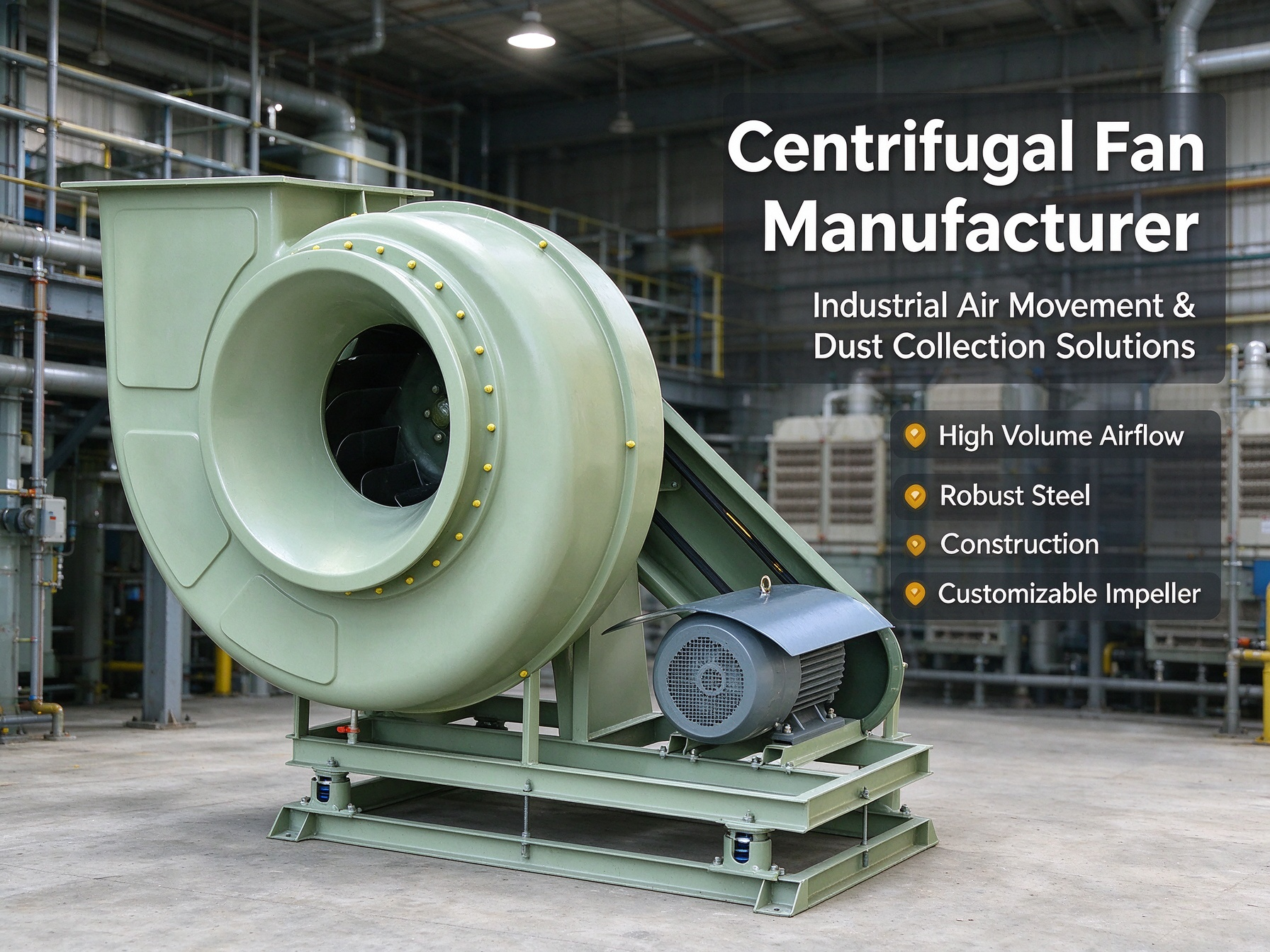
Why Noise and Vibration Matter in Centrifugal Fan Applications
In an industrial setting, noise isn't always just an annoyance. Depending on where the fan is installed, excessive sound can affect the working environment, equipment acceptance, and whether the system is suitable for the site.
Vibration can be even more troublesome over time. Continuous vibration puts extra stress on bearings, shafts, couplings, mounting points, and nearby structures. When the original problem is ignored, wear can build up and maintenance may become more frequent.
And the fan itself isn't always the problem.
Duct turbulence, loose mounting hardware, resonance, incorrect airflow conditions, or even a vibrating housing panel can add to the sound and movement people notice.
So when a fan starts behaving differently, it makes sense to inspect the complete system instead of immediately blaming the rotating assembly.
Impeller Imbalance Is a Common Cause of Mechanical Vibration
The impeller is one of the main places to look when a centrifugal fan develops unusual vibration.
Because the impeller rotates at relatively high speed, even a small difference in mass distribution can create noticeable centrifugal force. Uneven material, manufacturing variation, dirt buildup, blade damage, corrosion, or deformation may all affect the balance.
That's why dynamic balancing is an important part of fan production and factory inspection.
A properly balanced impeller is less likely to generate unnecessary mechanical vibration under normal operating conditions. But balance isn't something that stays unchanged forever. Dust, grease, or process material can collect on the blades after installation and shift the weight distribution.
For industrial buyers, it is useful to ask a Centrifugal Fan Manufacturer how balancing is carried out and whether the specified balance applies to the complete rotating assembly.
Bearing Problems Can Increase Both Noise and Vibration
Bearings support the rotating shaft, so their condition has a direct effect on fan operation.
Wear, poor lubrication, contamination, incorrect installation, and shaft misalignment can all lead to abnormal sound or increased vibration. Sometimes the vibration starts to rise before obvious damage can be seen.
The surrounding environment can make things harder. Dust, heat, moisture, and chemical exposure may affect bearing life depending on the application and bearing arrangement.
Maintenance teams should keep an eye on changes in:
- Bearing temperature
- Sound character
- Vibration amplitude
- Lubrication condition
- Shaft movement
A gradual increase in vibration is worth checking. Waiting until the fan becomes noticeably noisy may mean a small issue has already turned into a larger maintenance job.
Misalignment Can Put Additional Stress on the Drive System
A centrifugal fan with a motor and shaft arrangement needs proper alignment to run smoothly.
If the motor, coupling, shaft, or bearing assembly is not aligned correctly, extra forces can appear during rotation. Those forces may increase vibration and also speed up wear on connected parts.
Misalignment can happen during installation, but it can also develop later because of movement in the foundation, thermal expansion, or changes in coupling adjustment.
For belt-driven fans, the pulleys and belts need attention too. A belt that is overtightened can place additional load on the bearings. Poor pulley alignment can create vibration and uneven belt wear.
This is why installation should follow the manufacturer's requirements for alignment, shaft setup, belt tension, and mounting.
Incorrect Airflow Conditions Can Create Aerodynamic Noise
Not every noisy fan has a mechanical fault.
A centrifugal fan is designed to work within a certain range of airflow, pressure, and rotational speed. When the actual operating point moves too far from the intended range, the airflow can become unstable and produce more aerodynamic noise.
Possible causes include:
- Excessive system resistance
- Partially closed dampers
- Undersized ductwork
- Poor inlet conditions
- Abrupt duct transitions
- Incorrect fan speed
- Improperly selected operating point
For example, turbulent air entering the fan can create additional noise even when the impeller and bearings are working normally.
This matters to system integrators in particular. A fan should be selected around the actual system resistance and airflow requirement. Simply picking a model because its nominal air volume looks large can create problems once it is connected to the real duct system.
The Fan Inlet and Outlet Design Can Influence Noise
Airflow usually behaves better when the inlet and outlet arrangement gives it enough room to develop properly.
An abrupt change in duct direction, a sudden reduction in duct diameter, or an elbow placed too close to the inlet can disturb the airflow. The result may be turbulence, pressure fluctuation, and additional noise.
So the relationship between the fan and the ductwork needs to be considered during system design.
Even a well-built centrifugal fan can sound louder than expected if it is installed directly beside a restrictive elbow or a poorly designed transition.
For larger industrial systems with strict airflow or acoustic requirements, airflow simulation or actual field testing may be worth considering.
Fan Speed Has a Direct Effect on Noise
As fan speed increases, aerodynamic activity usually increases too. Mechanical vibration can also become more noticeable if balance, alignment, or structural stiffness isn't adequate.
This creates a practical limitation on simply increasing speed to get more airflow.
A higher-speed condition can affect:
- Airflow
- Static pressure
- Noise
- Motor load
- Bearing load
- Power consumption
- Vibration
The exact effect depends on the fan design, so speed changes should be treated carefully.
When a variable-frequency drive is used, the acceptable speed range should be defined for the complete fan assembly. A motor may be capable of operating at a certain speed while the impeller, bearings, or housing may have different limits.
Structural Resonance Can Amplify Fan Vibration
Sometimes the fan's own vibration isn't particularly large, but the structure it is mounted on makes it seem much worse.
Every structure has natural frequencies. If the operating frequency of the fan or another rotating component gets close to one of those frequencies, resonance can amplify the movement.
That can make certain speed ranges especially troublesome.
A fan mounted on a light, flexible platform may therefore behave very differently from the same fan installed on a rigid foundation.
Mounting design should consider:
- Base rigidity
- Anchor bolts
- Isolation mounts
- Equipment weight
- Fan operating speed
- Structural natural frequency
Vibration isolators can reduce the amount of movement transferred into nearby structures, but they still need to be selected for the fan's actual weight and operating characteristics.
Loose Fasteners and Mounting Problems Should Not Be Overlooked
Sometimes the cause is surprisingly simple.
Loose foundation bolts, brackets, guards, access doors, housing panels, or duct connections can rattle when the fan is running. The rotating assembly may be working normally while a loose panel creates the noise everyone hears.
A basic inspection should include:
- Foundation and mounting hardware
- Motor and fan connections
- Couplings and guards
- Belt tension
- Housing panels
- Duct connections
- Isolation components
These checks don't take much time, and they can catch issues before they turn into bigger mechanical problems.
Dirt and Material Buildup Can Change Impeller Balance
Dust collection and process ventilation systems often handle air containing particles, fibers, grease, or other material.
Over time, that material can collect unevenly on the impeller. Once the mass distribution changes, the rotating assembly may become unbalanced.
This is a good reason to include internal cleaning and inspection in the maintenance schedule.
A clean-air ventilation fan may go a long time without needing internal cleaning. A process exhaust fan working in a dusty environment can be a different case entirely.
The handled air should also be considered when selecting the fan. Dusty, corrosive, or high-temperature process air may require different materials and protective measures from a standard clean-air application.
Material Selection Can Affect Long-Term Vibration Behavior
Fan materials affect more than corrosion resistance. They also influence weight, stiffness, structural strength, and how the assembly responds during operation.
Carbon steel, stainless steel, aluminum, and other materials may be used for different applications. A fan exposed to corrosive gases, for example, may need corrosion-resistant materials or a suitable protective coating.
Thickness and reinforcement matter as well. A housing or support that is too flexible can vibrate when the fan is running.
For OEM buyers, material selection should therefore be based on the real environment and mechanical conditions. A lightweight material isn't automatically the right choice, and a heavier structure isn't automatically necessary either.
How Noise and Vibration Are Checked During Factory Quality Control
A fan manufacturer may carry out several inspections before the unit leaves the factory.
Dynamic balancing is especially important for rotating assemblies. Manufacturers may also run the fan to check operating sound, vibration, rotation direction, motor current, and other basic performance indicators.
The exact inspection method depends on the fan design and the customer's requirements.
| Quality control item |
What it helps verify |
| Impeller balance |
Reduces vibration from uneven mass distribution |
| Shaft inspection |
Checks dimensional and mechanical condition |
| Bearing inspection |
Helps identify fit or component problems |
| Motor test |
Verifies electrical and operating performance |
| No-load operation |
Checks abnormal sound or vibration |
| Operating test |
Confirms behavior under specified conditions |
| Housing inspection |
Checks fit, rigidity, and assembly |
| Final dimensional check |
Confirms compliance with drawings |
For a customized industrial fan, it is better to agree on specific acceptance criteria and test conditions instead of relying on a general statement that the product has passed inspection.
What B2B Buyers Should Ask a Centrifugal Fan Manufacturer
When sourcing a fan for a new project, the supplier needs enough application information to make a useful recommendation.
Important details can include required airflow, static pressure, air temperature, gas composition, dust content, mounting position, operating speed, ambient conditions, and duty cycle.
Buyers can also ask:
- How is the impeller balanced?
- What vibration limits are used during factory testing?
- What operating range does the fan support?
- What type of bearing arrangement is used?
- Which materials and coatings are available?
- Can airflow, pressure, speed, or mounting dimensions be customized?
- What maintenance instructions are supplied?
These questions help reveal whether the manufacturer is working from the actual application or simply offering a standard catalog model.
How Sample Testing Can Prevent Problems in Bulk Orders
For bulk purchases, testing one representative fan before full production can reduce a lot of risk.
The sample should be tested under conditions that are reasonably close to the final installation. Airflow, static pressure, motor current, sound, vibration, and operating temperature can all be recorded to create a useful reference.
If the fan is part of a larger ventilation system, testing the complete setup can be even more useful. Duct resistance, mounting conditions, and inlet geometry may change the final performance.
For OEM projects, keeping a record of the approved sample and its configuration can also help maintain consistency across later production batches.
Practical Steps for Reducing Excessive Fan Noise and Vibration
When an installed centrifugal fan becomes noisier or starts vibrating more than usual, the inspection doesn't need to begin with the complicated stuff.
Start with mounting bolts, guards, panels, belts, couplings, bearings, and other obvious mechanical points. Then check the impeller for dirt buildup, deformation, or visible damage.
After that, look at the operating conditions. Fan speed, system pressure, airflow, damper position, inlet arrangement, and duct configuration can all change how the fan behaves.
When those checks don't explain the problem, vibration measurement can help narrow it down. Depending on the readings, the issue may be related to imbalance, misalignment, bearing condition, or structural resonance.
For critical industrial equipment, professional vibration analysis can be useful, especially when unexpected downtime would affect production.
Building a Quieter and More Stable Centrifugal Fan System
Excessive fan noise and vibration can come from a number of sources. Impeller imbalance, bearing wear, misalignment, turbulent airflow, excessive speed, structural resonance, loose hardware, and poor installation can all play a part.
For buyers working with a Centrifugal Fan Manufacturer, fan selection should therefore go beyond airflow and pressure. Balancing, motor speed, bearing design, materials, mounting, duct arrangement, and factory testing can all influence what happens after installation.
A practical approach is to define the real operating conditions, select the fan around those conditions, and then verify the design with appropriate testing. That makes it easier to control noise and vibration while also reducing unnecessary maintenance problems once the fan is in regular service.

 English
 русский
 عربى
عربى
 Inquiry