English
 русский
 عربى
عربى
 Inquiry

Industry News
Home / News / Industry News / How Multi Wing Fan Blade Design Affects Airflow and Cooling Performance
2026-10-02
Fan blades do not look complicated at first glance. But if you change the blade angle, width, number, or diameter, the way the fan moves air can change quite a bit. That also affects motor load, noise, power consumption, and the actual cooling effect you get after installation.
This matters when choosing a Multi Wing Fan for an industrial ventilation system. A bigger fan is not automatically the right answer, and adding more blades does not always mean more airflow. The fan has to work with the motor, housing, installation space, and the resistance in the air system.
For equipment manufacturers, HVAC suppliers, system integrators, and other industrial buyers, understanding the basic relationship between blade design and airflow makes it easier to choose a fan that actually fits the application.
A multi-wing fan has several relatively wide blades fixed around a central hub. When the motor turns the hub, the blades push air forward and create continuous air movement.
These fans are often used where a large amount of air needs to be circulated without requiring very high pressure. You can find them in factory ventilation systems, greenhouses, livestock buildings, cooling equipment, warehouses, and other large spaces.
The basic process is pretty simple:
Motor → Hub → Blades → Airflow → Cooling or ventilation
The tricky part is what happens between those steps. Change the blade geometry, and the motor load and airflow will change with it.
Cooling is ultimately about getting enough air to the place where heat is building up.
If the airflow is too low, hot air may stay around the equipment or inside the building. But simply installing a larger fan is not always the solution. If the fan is poorly matched to the system, it may consume more electricity without giving the expected improvement.
Blade design affects several things at once:
That is why two fans using similar motors can behave quite differently once different blade designs are fitted.
The number of blades is one of the easiest differences to see. It is also one of the things buyers sometimes focus on too much.
More blades give the rotor more total blade area, but that does not automatically produce more airflow. The extra blade area may also increase motor load and change pressure and noise characteristics.
With fewer blades, there is more open space between each blade, allowing air to pass through the rotor differently.
| Blade count | Possible characteristic | Design consideration |
|---|---|---|
| Fewer blades | More open space between blades | May suit applications focused on air circulation |
| Medium blade count | More balanced blade coverage | Often used for general ventilation |
| More blades | More blade area interacting with air | May increase pressure and motor load |
The important thing is to look at blade count together with pitch, width, diameter, and RPM. Looking at the blade count alone does not tell you how the fan will perform.
Blade pitch is basically the angle of the blade.
A steeper pitch makes the blade push against more air during each revolution. That can increase airflow, but it also asks more from the motor.
This is where fan design can become a balancing act. If the pitch is too large, motor power and energy consumption may rise. If it is too small, the fan may not move enough air for the application.
For buyers comparing different models, asking about blade pitch is worthwhile, especially when the fan is being used in a custom machine.
Blade width affects how much air the blade can interact with as it rotates.
A wider blade may move more air, but it also creates more aerodynamic resistance. So, again, there is no simple “wider is better” rule.
A large ventilation fan for a warehouse may need broad blades, while a smaller fan inside a piece of cooling equipment may require a different proportion.
For custom fan development, blade width should be considered alongside diameter, pitch, RPM, and motor power.
Fan diameter matters because it determines how large an area the blades sweep.
The swept area can be approximated as:
where A is the swept area and D is the fan diameter.
A larger fan covers more area, so it can move a substantial amount of air without necessarily spinning extremely fast. This is one reason large-diameter fans are common in warehouses, agricultural buildings, and industrial ventilation.
There is still a practical limit. A larger fan needs enough installation space, structural support, motor capacity, and safety clearance.
RPM has a noticeable effect on fan performance.
Increasing speed generally increases airflow and air velocity. The downside is that motor load, noise, and mechanical stress can rise as well.
So if a fan is not moving enough air, simply increasing the RPM may not be the smartest fix.
| Speed change | Potential effect |
|---|---|
| Higher RPM | More airflow, but higher load and noise |
| Lower RPM | Less airflow and noise, with lower power demand |
| Optimized RPM | Better balance between airflow, cooling, and energy use |
Variable-speed control can be useful when the cooling demand changes during operation. For example, a system may not need the same airflow all day.
There is more to a blade than its size and angle.
The curve and profile of the blade affect how air is guided as it passes through the fan. A different curve can change turbulence, pressure, noise, and efficiency.
This is why two blades with the same diameter and similar pitch can still produce different results.
For OEM projects, manufacturers may use prototypes or airflow testing to compare different profiles. In some cases, simulation can also be used before making production tooling.
Blade material affects weight, stiffness, corrosion resistance, and manufacturing consistency.
Steel, aluminum, and engineering plastics are all used in different types of fan applications.
| Material | Potential characteristic | Typical consideration |
|---|---|---|
| Steel | Strong and durable | Useful for demanding industrial environments, but heavier |
| Aluminum | Lightweight | Can reduce rotating weight and offers useful corrosion resistance |
| Engineering plastic | Lightweight and easy to form | Suitable for selected applications and more complex shapes |
Material choice also affects balance. If blade weight varies too much from one blade to another, vibration can become a problem once the fan starts rotating at operating speed.
This is an area that is easy to miss when comparing fan specifications.
A fan may show a certain airflow figure when operating in open air. But once it is installed behind a filter, screen, louver, duct, or heat exchanger, the situation changes.
All those components create resistance.
As resistance increases, actual airflow can fall. So buyers should not look at the free-air airflow number alone.
Useful specifications include:
A fan performance curve is particularly useful because it gives a better idea of what happens as system resistance changes.
The motor has to turn the blades and overcome the resistance created by moving air.
Blade pitch, width, number, and RPM all affect how hard the motor has to work.
For example, increasing the blade pitch may give you more airflow, but the motor may also need more torque. If the fan operates for long hours every day, that extra power consumption can become a noticeable operating cost.
The fan and motor should therefore be selected as a pair. A blade that looks good on paper is not much use if the motor is constantly being pushed beyond a sensible operating range.
Airflow is only part of the story.
A fan installed in a factory may not have the same noise requirements as one installed in a warehouse, office, retail space, or agricultural building.
Noise can come from several sources:
Blade shape affects aerodynamic noise, while manufacturing accuracy and balancing have a direct effect on vibration.
A fan that vibrates unnecessarily can also place additional stress on bearings, mounts, and surrounding equipment.
Every rotating fan assembly needs to be properly balanced.
Imagine one blade being slightly heavier than the others. At low speed, the difference might not seem important. At operating speed, however, that small imbalance can create considerable centrifugal force.
Possible results include:
For this reason, manufacturers need to control blade dimensions and weight and use suitable balancing procedures during production.
For buyers, it is worth asking how the finished fan assembly is balanced. It is a small question, but it can tell you something useful about the production process.
Not every cooling system needs the same kind of fan.
Factories and workshops often need to move a large amount of air through a relatively large space. A multi-wing fan can be suitable for this type of air circulation.
Fan diameter, installation height, motor speed, and room layout all affect the final result.
Greenhouses and livestock buildings often need continuous air movement, especially during hot weather.
Here, airflow is important, but so are corrosion resistance, cleanability, and the ability to operate for long periods.
Industrial equipment can generate a lot of heat in a relatively small area.
In this case, the fan may need to move air across specific components, so airflow direction and static pressure can become more important than simply moving a large amount of air.
Warehouses, retail spaces, and other commercial buildings usually need a balance between airflow, noise, energy consumption, and installation space.
The blade configuration should be chosen according to the actual environment.
When buying a fan, asking only for diameter and motor power does not give you the full picture.
| Specification | Why it matters |
|---|---|
| Fan diameter | Determines swept area |
| Blade count | Changes airflow characteristics |
| Blade pitch | Affects airflow and motor load |
| Blade width | Influences air volume and load |
| RPM | Determines operating speed |
| Air volume | Shows expected airflow |
| Static pressure | Shows how the fan performs against resistance |
| Motor power | Needs to match the actual load |
| Material | Affects weight and environmental resistance |
| Balance | Helps control vibration |
| Noise level | Important for occupied areas |
| Efficiency | Useful when estimating running costs |
It is also a good idea to ask how the manufacturer obtained the airflow figures. A number without test conditions does not tell you very much.
Standard fan blades work for many applications. But equipment manufacturers sometimes have limited installation space or a very specific airflow target.
In those cases, custom blade development may make more sense.
Customization can include:
The manufacturer will normally need information about the motor, required airflow, available space, operating temperature, and system resistance before recommending a blade design.
For a new OEM project, testing a prototype before committing to a larger production run can also save trouble later.
Before choosing a Multi Wing Fan, start with the actual application.
Airflow: How much air needs to be moved?
Pressure: What resistance will the fan face after installation?
Blade geometry: Are the blade count, pitch, width, and profile suitable?
Motor: Can the motor handle the blade load at the required RPM?
Environment: Will the fan face dust, moisture, heat, or corrosive conditions?
Noise: Is the expected sound level acceptable?
Balance: Is the rotating assembly properly balanced?
Maintenance: Can the important components be accessed without making servicing unnecessarily difficult?
The performance of a Multi Wing Fan comes from the combination of its blade design, motor, and installation conditions. There is no single blade feature that tells you whether a fan will work well.
Blade count, pitch, width, curvature, diameter, and material all play a part. RPM and system resistance then determine what those design choices actually mean once the fan is running.
For industrial buyers, it is usually more useful to start with the required airflow and pressure and work backward from there. Energy use, noise, vibration, operating environment, and maintenance should be considered at the same time.
For OEM projects, talking with the manufacturer during the design stage can also make things easier. Blade size, hub dimensions, material, mounting details, and other features can be adjusted around the equipment instead of trying to force a standard fan into a space where it does not quite fit.
In the end, a multi-wing fan does not need complicated specifications to be useful. It needs to be properly matched to the job. When the blade geometry, motor, and system conditions line up, the fan can provide steady airflow and practical cooling for industrial, agricultural, and commercial applications.

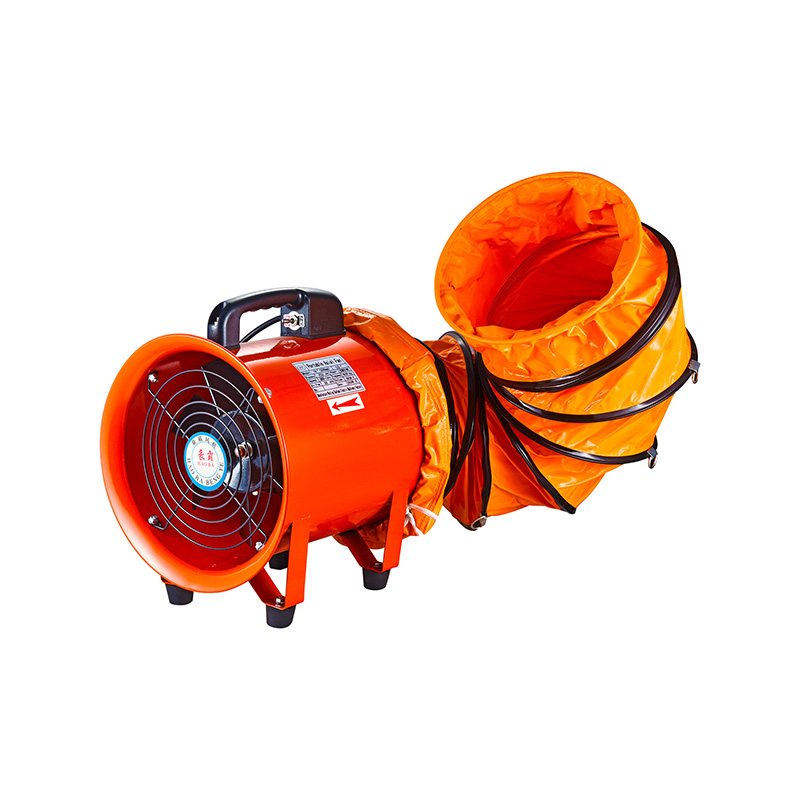
Model: SF
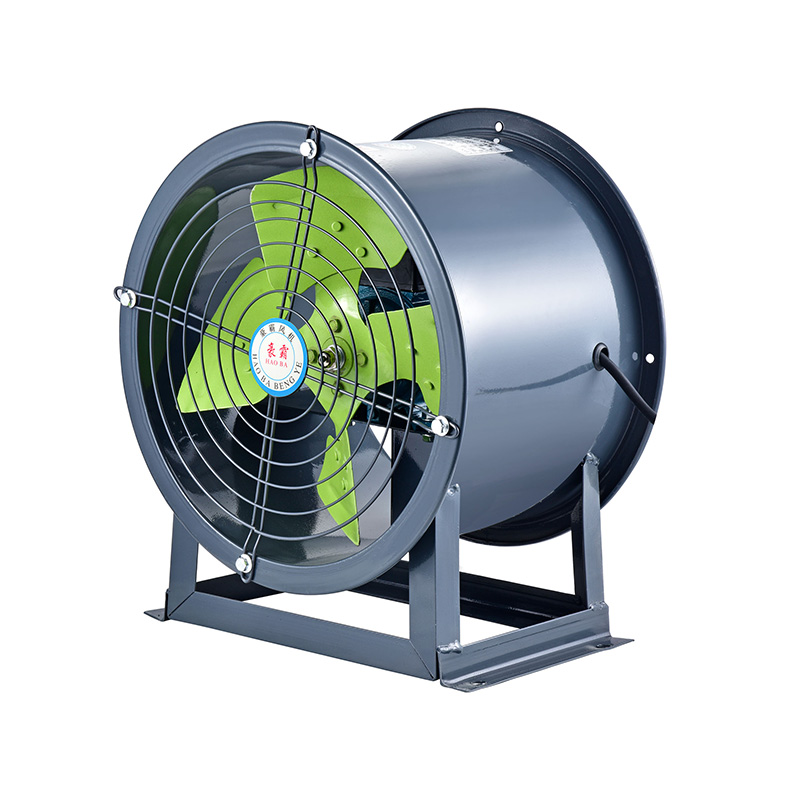
Model: SWF-I. II. III
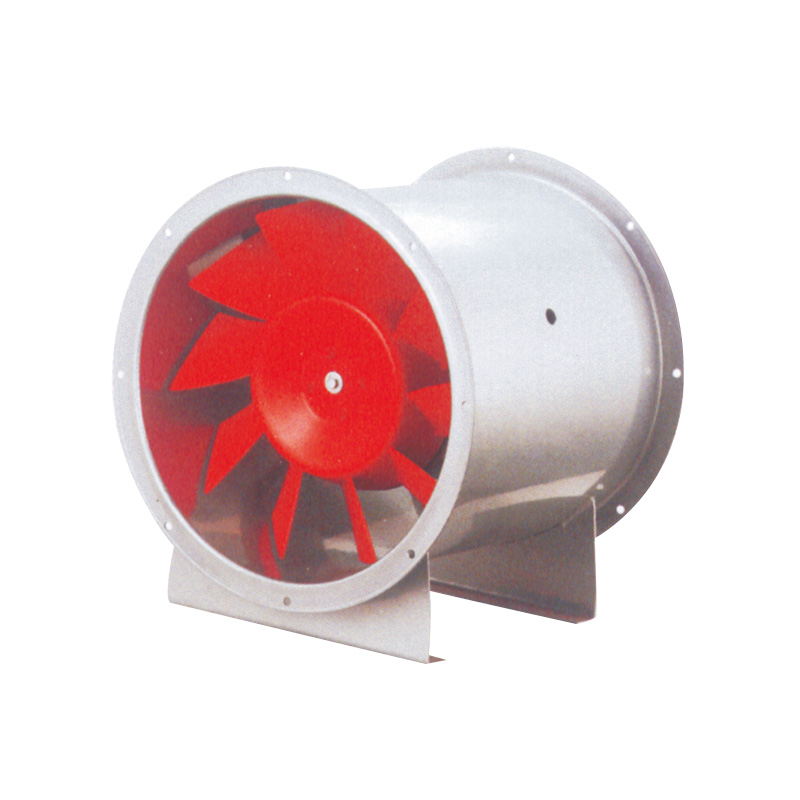
Model: YG5-47
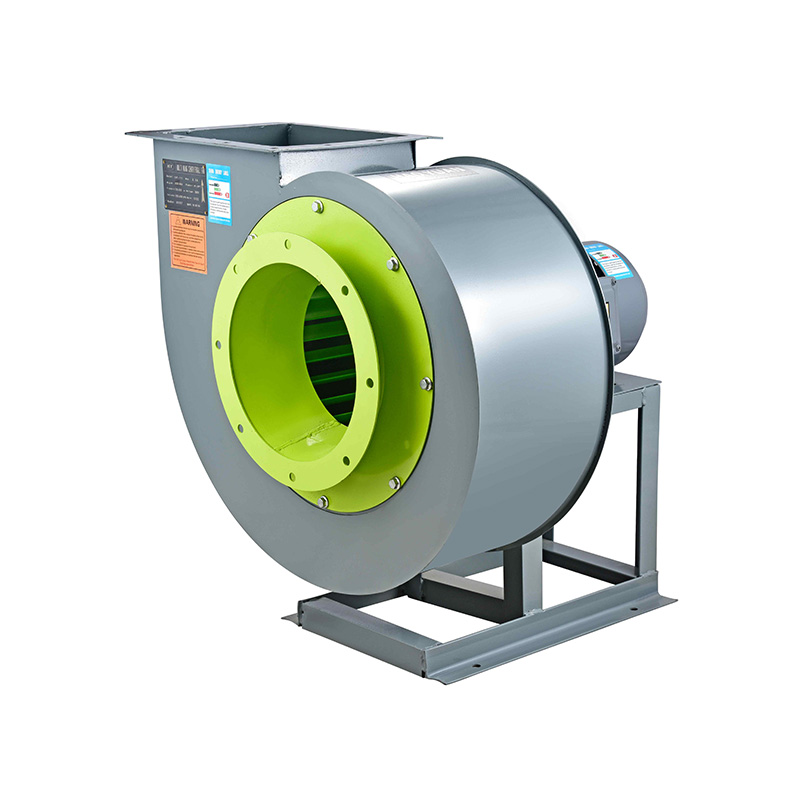
Model: WT35-11/FWT35-11

No. 12, Caoao Industrial Zone B, Daxi Town, Wenling City, Taizhou City, Zhejiang Province, China.
Email: [email protected]
Tel: +86-0576-8631 3688
Phone: +86-189-6859-2966
FAX: +86-0576-8631-3688
Copyright © Taizhou Haoba Electromechanical Co., Ltd. All Rights Reserved.

Industrial Centrifugal Fan Manufacturer