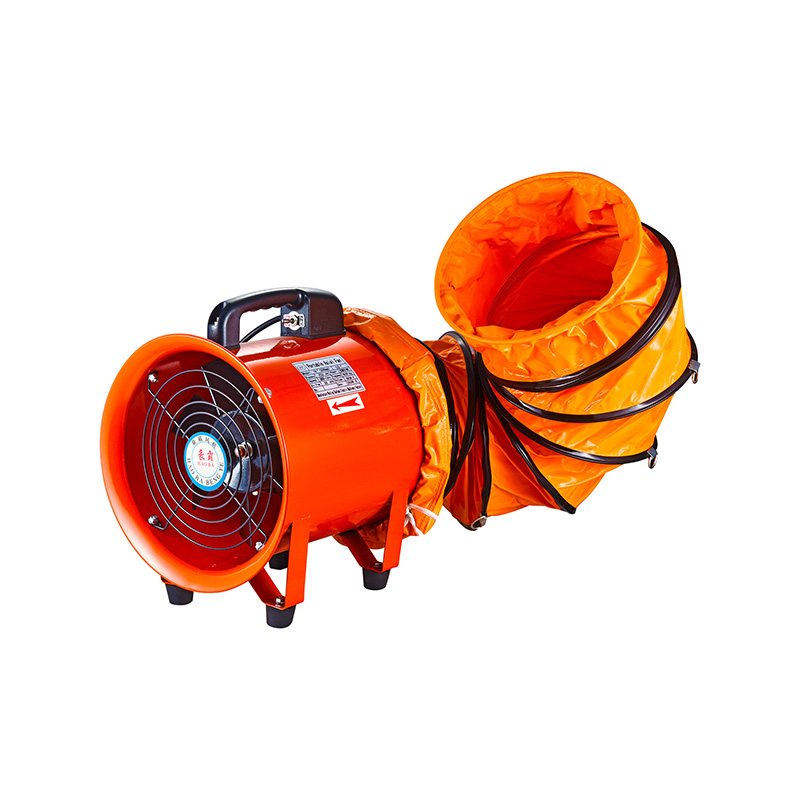
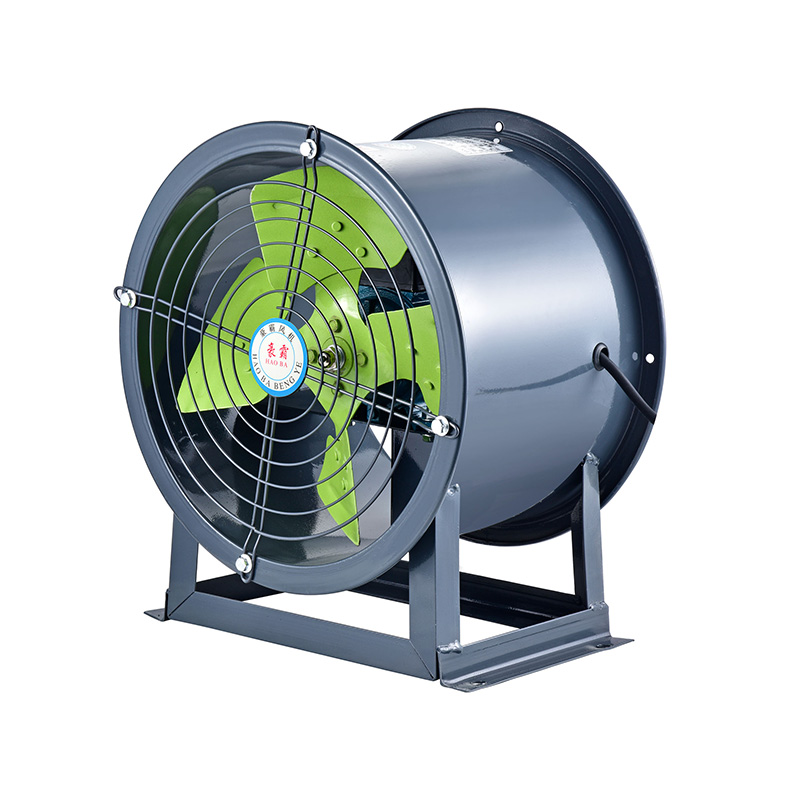
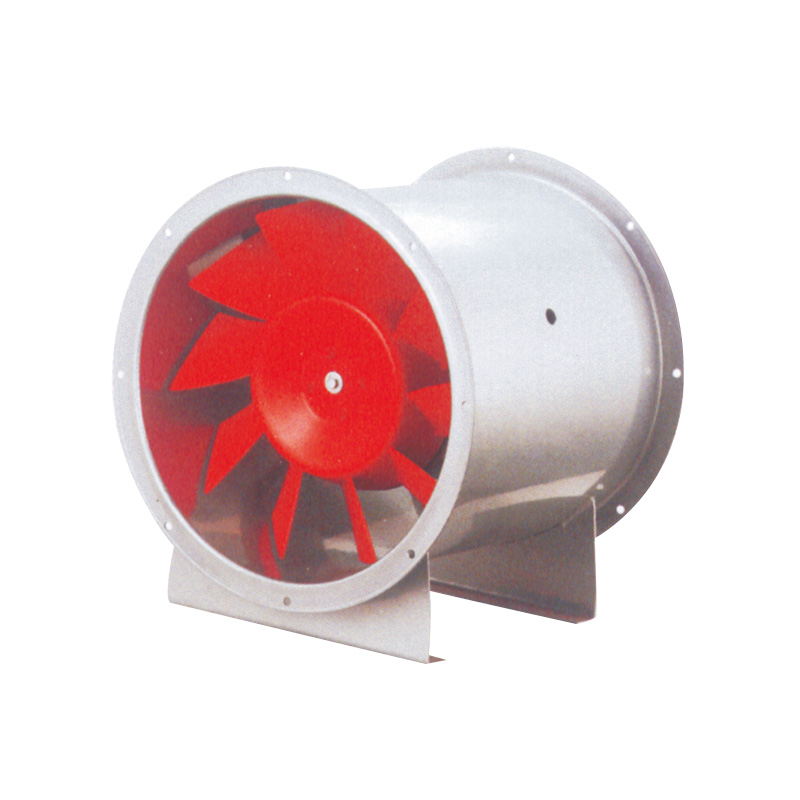
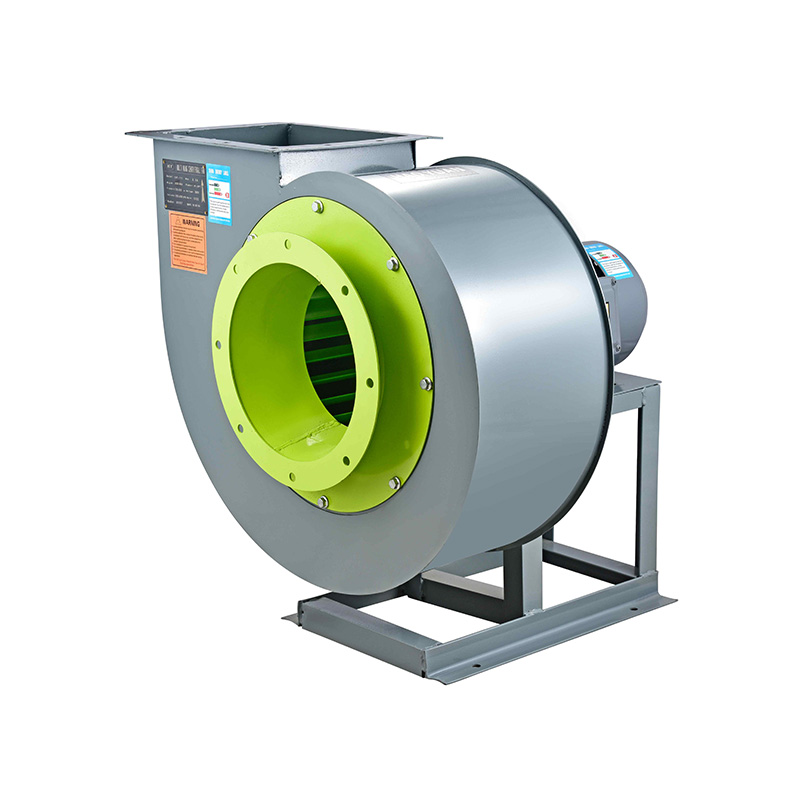
Choosing the wrong fan for a ventilation project is a costly mistake — not just financially, but operationally. You spec a unit for airflow, install it, and then spend months fielding noise complaints or watching performance fall short under real conditions. For engineers and procurement teams working across industrial plants, commercial facilities, or large-scale HVAC systems, the tension between noise control and airflow output is a genuine design challenge. A Low Noise Axial Flow Fan sits directly at the center of that tension, and understanding how it navigates both demands is where smarter purchasing decisions begin.
Understanding the Axial Flow Fan Working Principle
Before comparing noise and airflow, it helps to understand what drives both. An axial flow fan moves air along the same axis as the rotating shaft — the blades pull air in and push it forward in a straight, parallel path. This geometry is why axial fans are associated with high-volume airflow: the design is naturally suited to shifting large amounts of air across open or semi-open spaces.
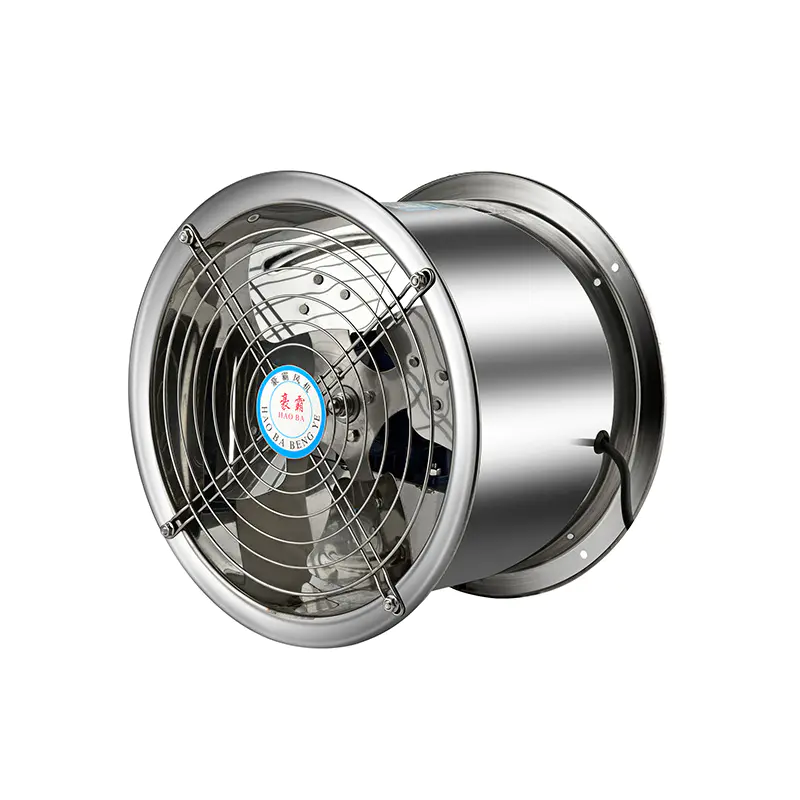
The axial flow fan working principle also explains why noise is a persistent concern. As blade speed increases to move more air, turbulence around the blade edges intensifies. That turbulence generates sound. It is a physical relationship, not a manufacturing flaw — and it is the core reason why the noise-vs-airflow trade-off exists in the first place.
Key factors that shape both noise and airflow output:
- Blade pitch angle and profile geometry
- Rotational speed relative to blade span
- Duct configuration and installation environment
- Motor placement and vibration isolation
Why Noise and Airflow Pull in Opposite Directions
Push a fan harder — increase RPM, narrow the blade pitch, shrink the diameter — and airflow goes up. So does noise. The relationship is not perfectly linear, but directionally, it holds across most axial fan configurations.
What makes this tricky in practice is that the acoustic impact compounds in enclosed or partially enclosed spaces. A fan that measures within acceptable noise levels in open-air testing can feel significantly louder once installed inside a duct, a wall cavity, or a production hall with reflective surfaces. The physical environment amplifies what the fan produces.
This is where the framing of "noise vs airflow" can mislead. It is rarely a binary choice. More often, the question is: at what point does increasing airflow create acoustic conditions that exceed what the environment can tolerate?
Does the Installation Type Change the Priority?
Absolutely — and this is where many procurement decisions go wrong by treating all fan applications as interchangeable.
Consider the difference between a factory floor extraction system and an office building's fresh air supply. Both need airflow. But the acoustic baseline in a manufacturing environment is already elevated — additional fan noise may be negligible. In an office or healthcare facility, even modest operational noise becomes a real comfort and compliance concern.
A Wall Mounted Axial Flow Fan illustrates this well. Mounted directly into a wall or partition, these units are physically close to occupied spaces. The mounting structure can transmit vibration into the building fabric, which means the acoustic design of the fan directly affects how it is experienced by people nearby.
Wall-mounted configurations tend to prioritize:
- Low vibration transmission through the mounting frame
- Smooth, steady airflow rather than pulsed output
- Housing designs that reduce turbulence noise at the intake and exhaust faces
What Makes a Bifurcated Axial Flow Fan Different?
The Bifurcated Axial Flow Fan is a design solution to a specific problem: what happens when the airstream itself is hazardous to the motor?
In standard axial fans, the motor sits directly within the airflow path. That works fine for clean, ambient-temperature air. But in industrial exhaust applications — where the air carries heat, smoke, corrosive particles, or moisture — motor exposure becomes a liability. Bifurcated designs route the motor outside the primary airflow channel. The blades still move air through the central duct, but the motor is protected in a separate housing.
The acoustic benefit is secondary but meaningful. With the motor decoupled from the airstream, there is less opportunity for motor vibration to couple with turbulent airflow and amplify into noise.
Typical applications for bifurcated fans:
- Kitchen and food processing exhaust
- Chemical plant ventilation
- Tunnel and underground facility air management
- High-temperature industrial extraction
How Does Blade Design Influence the Noise-Airflow Balance?
Not all blades are equal, and blade geometry is one of the clearest levers available to engineers trying to shift the noise-airflow curve.
Wider, longer blades rotating at lower speeds can move comparable volumes of air to narrower blades spinning faster — with meaningfully less turbulence noise. This is a foundational principle behind low-noise fan engineering: use blade geometry to do more work at lower rotational velocity.
Aerodynamic blade profiles — where the leading and trailing edges are shaped to minimize flow separation — further reduce the turbulent wake that generates high-frequency noise. In applications where acoustic performance is a genuine requirement, blade profile selection can make the difference between a fan that passes noise compliance testing and one that does not.
Scenario Comparison: When to Prioritize What
Different environments call for different weighting of noise and airflow. A structured comparison helps clarify the decision:
| Application Environment |
Airflow Priority |
Noise Priority |
Recommended Configuration |
| Industrial factory floor |
High |
Low |
High-performance axial, bifurcated if exhaust |
| Commercial office building |
Moderate |
High |
Low noise axial, wall mounted with vibration isolation |
| Warehouse or logistics facility |
High |
Moderate |
Standard axial with acoustic housing options |
| Healthcare or education facility |
Moderate |
High |
Low noise wall mounted axial |
| Tunnel or underground ventilation |
High |
Low |
Bifurcated or high-capacity axial |
| Restaurant or kitchen exhaust |
Moderate |
Moderate |
Bifurcated axial for motor protection |
| Server room or data center cooling |
High |
Moderate |
Low noise axial with thermal management focus |
The pattern that emerges is fairly consistent: the more directly a fan interacts with occupied human space, the more acoustic performance weighs in the selection. Where the fan serves purely functional extraction in non-occupied zones, airflow capacity takes precedence.
Can a Single Fan Design Handle Both Demands Well?
To a degree — yes. Modern low-noise axial fan engineering has narrowed the gap between acoustic comfort and airflow output considerably. Variable speed drives allow a single unit to operate quietly at partial load and ramp up when ventilation demand increases. This flexibility is valuable in spaces where occupancy and heat loads fluctuate throughout the day.
That said, there are physical limits. A fan asked to maintain very high airflow continuously in a noise-sensitive environment will eventually require compromises: additional acoustic lining, inlet silencers, or vibration-isolated mounting systems. These add cost and installation complexity. Some applications genuinely need two different fans — one for quiet baseline operation, another for peak extraction — rather than a single unit pushed to the edge of its acoustic range.
What Should Procurement Teams Actually Evaluate?
When sourcing from a wholesale axial flow fan supplier or engaging directly with an axial flow fan factory, the conversation should go beyond nameplate specifications.
Useful questions to raise during evaluation:
- What is the acoustic performance at varying operational speeds, not just at rated load?
- How is vibration isolated between the motor, housing, and mounting structure?
- What blade materials and profiles are used, and how do they affect noise at higher airflow settings?
- Are there tested configurations for the intended installation environment — ducted, wall-mounted, open-face?
- What is the variance in acoustic performance across production batches?
Wholesale purchasing decisions often involve installing many units across a facility or project. Variation in noise output between units — even modest variation — can create inconsistency in the acoustic environment that is difficult to address after installation.
Why Acoustic Standards Are Increasingly Shaping Fan Specifications
Building regulations and occupational health standards in many markets have tightened acoustic requirements for mechanical ventilation systems. This is not a peripheral concern for procurement — it directly affects which products are compliant for a given application.
Commercial buildings are increasingly evaluated on indoor environmental quality, which includes acoustic comfort alongside air quality and thermal performance. Facilities that fall short of these standards face remediation costs that far exceed the savings from purchasing a cheaper, louder unit.
The trend toward quieter ventilation has pushed manufacturers to treat noise reduction as a primary engineering goal rather than an afterthought. For buyers evaluating axial flow fan factory capabilities, a supplier's investment in acoustic testing and blade aerodynamics is a reliable signal of how seriously they take long-term product quality.
Bringing the Decision Together
Neither noise nor airflow is inherently more important — the answer depends on where the fan operates, who is nearby, and what the ventilation system is actually trying to achieve. A well-matched fan feels invisible: the air moves, the environment stays comfortable, and the system runs without drawing attention to itself. Getting there requires understanding the working principle behind axial fan performance, recognizing how installation configuration shapes the acoustic outcome, and choosing between specialized designs — wall mounted, bifurcated, variable speed — based on real project conditions rather than catalog defaults. For procurement teams and ventilation engineers looking to source units that genuinely balance these demands, working with a manufacturer who understands both the engineering and the application context makes the selection process considerably more reliable. Taizhou Haoba Electromechanical Co., Ltd. brings that combination of design depth and production consistency to axial fan supply, making it a practical partner for projects where getting the noise-airflow balance right is not optional.


 English
 русский
 عربى
عربى
 Inquiry